Turning natural biomass resources into sustainable products that reach commercial markets.

For Founders and Impact Funders · In development

Your product idea for the bioeconomy. A governed pathway towards pilot.

Anyone with an idea for a bio-based product should be able to explore its potential. We are building AKOS to help you make that idea understandable, develop a detailed brief and assess the commercial, technical and impact questions before committing to substantial development.

Where the evidence supports progress, the journey continues through experiments, refinement and repeatable processes—building Commercial, Technical and Impact Due Diligence alongside an actionable Pilot Plan.

Good ideas need more than good science.

“The UK’s research capabilities are world-class, but commercialisation remains a persistent challenge.”

— Earth Capital Nexus at LSE, The UK’s bioeconomy, October 2026 (PDF, opens in a new tab)

Getting a bio-based product to market means bringing customer demand, technical performance, manufacturing, regulation, impact and finance together. AKOS is being developed to connect those questions, the right people and the evidence from day one—helping founders identify problems earlier and build a credible pathway towards pilot.

Imagine itTest itDevelop it

One connected pathway · Eleven governed phases

From an idea to a pilot-ready plan

See the whole journey before exploring the detail. Commercial, technical and impact questions matter from day one; the evidence develops as the work progresses.

  1. Phases 1–2

    Clarify the idea

    Turn an initial thought into a visual concept and a developing specification. Identify the people and capabilities the work will need.

    Visual concepts · Contextual questions · Requirements
  2. Phases 3–5

    Assess the opportunity

    Examine the commercial, technical and impact case alongside regulation, intellectual property, freedom to operate and dependencies. Build a fully specified brief for the current decision.

    Evidence · Route options · Early viability
    Early decision after Phase 5Will It Fly?
  3. Phases 6–8

    Experiment and refine

    Plan experiments, agree protocols and use results to improve the product and process. Develop controlled Standard Operating Procedures (SOPs), repeatability and scale-up evidence.

    Experiments · Results · Iteration · SOPs
  4. Phases 9–10

    Strengthen the case

    Develop the commercial model and integrate the Technical, Commercial and Impact Due Diligence. Bring the evidence, economics and unresolved risks together.

    Integrated evidence · Economics · Investment case
  5. Phase 11

    Prepare for pilot

    Bring the facilities, team, resources, budget, risks and success criteria into an actionable Pilot Plan for human authorisation.

    Pilot Plan · Human decision · Handover

Evidence changes what happens next. Proceed, investigate, reshape, pause or stop. New findings can change the brief, the development route or the next experiment.

Connected from day one

People and partners

Founders, customers, funders and specialist partners contribute knowledge and take responsibility for decisions.

Who can contribute?
  • Customers and end-users
  • Executive leadership
  • Investors and capital partners
  • Scientific and technical advisers
  • Research institutes and universities
  • Operations and manufacturing
  • Supply chain and distribution
  • Regulatory specialists
  • Intellectual property and legal advisers
  • Strategic partners
  • Impact and environmental, social and governance specialists

Specialist AI assistance

Support for concepts and specifications, research and feasibility, experiments and SOPs, Due Diligence, workflow and pathway coordination.

AI researches, structures, challenges and recommends. People provide professional conclusions, approve experiments and make consequential decisions.

One shared project record

Keep evidence and sources, permissions, intellectual property, linked projects, dependencies, risks, costs, maturity and decisions connected.

The founder controls direction and access. Contributions remain attributable as the team and project develop.

Four living outputs

Built and updated as evidence grows—not assembled for the first time at the end.

The pathway describes the intended AKOS platform, which is in development. Specifications evolve with evidence; progression requires human approval.

View the full pathway graphic (opens in a new tab)

Vision Studio

Make the idea visible. Question it. Build the brief.

Make an incomplete thought understandable, then develop the requirements and specification as questions are answered and evidence changes.

Successive visual iterations and supporting images can clarify the intended form, features, use and alternative directions. Alongside the visuals, AKOS asks questions that respond to the product and to the answers already given.

You are not expected to know every answer.

You can answer what you know. A member of your team, an invited collaborator or the most appropriate specialist can respond where their knowledge is needed.

The answers build a brief covering requirements, intended impact, assumptions, constraints and unanswered questions. The visual helps people understand the idea; the brief gives them something to assess and develop.

The founder controls the conversation. Invite the people who can help and share information according to the access you grant. The brief brings together purpose, intended users, requirements, material and process assumptions, impact aims, constraints and unanswered questions.

Concept visuals communicate intent. They do not prove performance, manufacturability, customer demand or impact. Those claims require evidence.

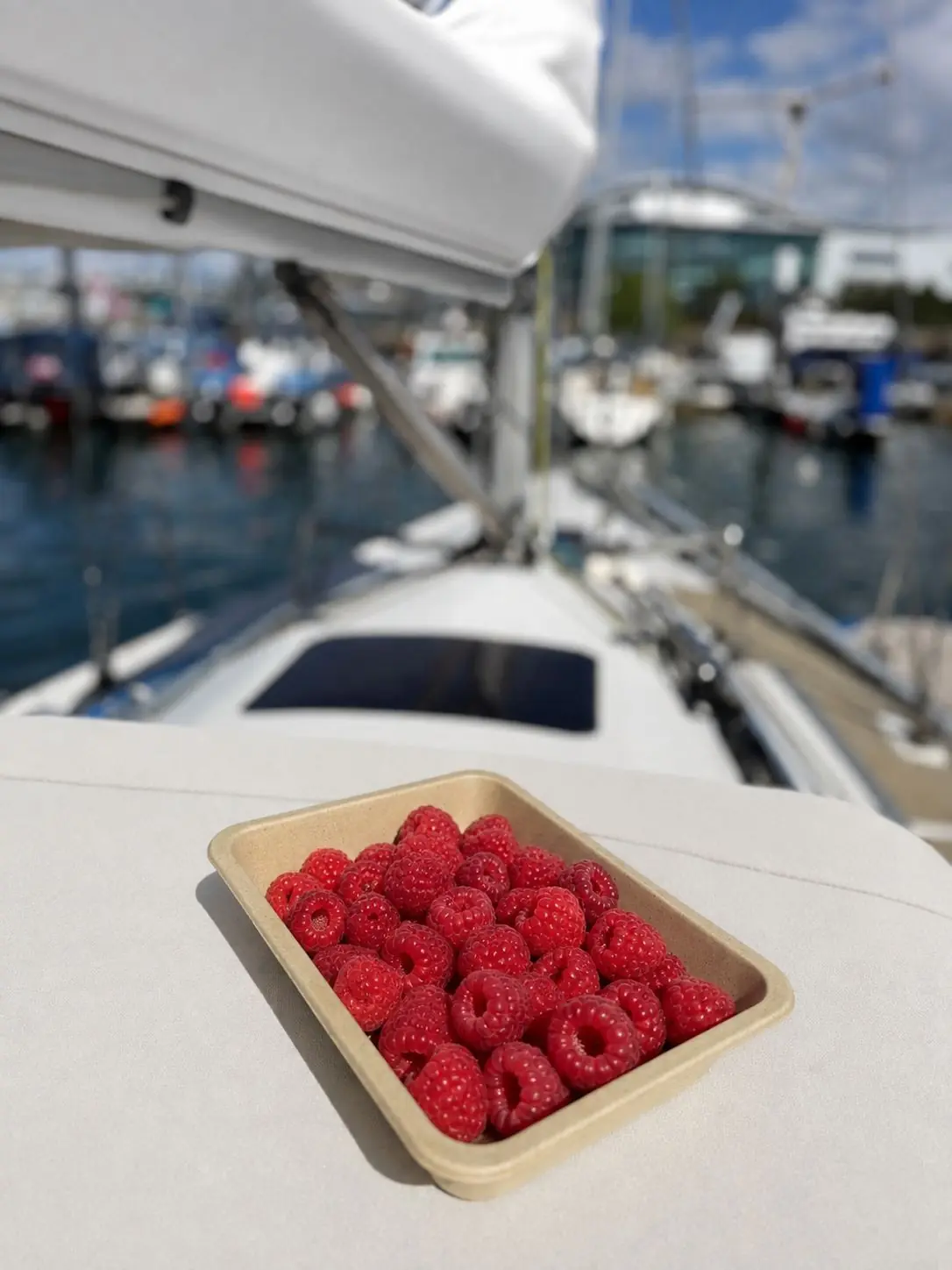
Vision StudioConcept 04 · Brief developing
Formed-fibre produce tray holding raspberries, used as an illustrative product-development exampleWhat barrier performance is required?Which geometry is essential?
Illustrative representation of the intended Vision Studio workflow using an AgriKinetics-owned product image. This is not a live software screen.

The first major decision

Will It Fly?

Before the experimental programme, Will It Fly? brings together the assessment across Phases 1–5: a brief specified for the current decision, market and customer evidence, technical routes, intended impact, regulation, intellectual property and dependencies. It asks whether there is a credible route forward and what must happen next.

The conclusion may be to proceed, investigate, reshape, pause or stop. Founders and Impact Funders can see what needs to be true and what needs proving before more time and money are committed.

A worthwhile purpose. An honest test.

What difference could this product make—and how would you know?

Your idea may be one contribution to a more sustainable world. AKOS is being developed to help you explain that ambition and work out what evidence would support it.

The Sustainable Development Goals (SDGs) provide a shared starting point. Identify relevant goals and targets, who could benefit and what you would measure. Then examine the material, process, energy, water, cost and end-of-life trade-offs.

A bio-based material or an SDG label does not, by itself, prove a positive impact. The aim is to make the intended contribution testable alongside product performance and commercial viability.

Governed iterative development

Turn uncertainty into experiments—and experiments into a repeatable process

The brief defines what needs proving. Turn important assumptions into planned experiments with clear questions, protocols, responsibilities, measurements and acceptance criteria. Develop Standard Operating Procedures (SOPs)—step-by-step instructions that help a process be carried out consistently.

01QuestionDefine the uncertainty or hypothesis
02PlanPrepare the protocol and success criteria
03RunPerform the experiment and record deviations
04LearnClassify results and interpret the evidence
05ImproveUpdate the specification, route and SOP

Then repeat. A result may support the route, reveal another question, require a change—or show that the idea should not continue in its present form.

Experiment EXP-014SOP development · Version 0.7
Question
Can the process meet the required performance consistently?
Protocol
Materials, equipment, parameters, method and controls
Success criteria
Measurements and acceptable limits defined before the run
Record
Results, observations, deviations and attributable evidence
Decision effect
Specification, cost, impact and next-action consequences
Working hypothesisHuman review required
Illustrative intended record, not a live software screen.
When evidence changes, see what else may need reviewProduct specificationTechnical routeCustomer propositionCost and economicsImpact and SDGsRegulation and safetyPartner workPilot readiness
A promising laboratory result is not yet a repeatable process.Build from an interesting result to a repeatable method, a controlled SOP and the scale-up evidence needed for a pilot.

Four living outputs

The work progressively builds the case for the next commitment

Bring the learning together throughout development, so Founders and Impact Funders can examine the case and its limitations before the next commitment.

TDD

Technical Due Diligence

Can the science, process and scale-up route be defended?

Performance, formulation, experiments, SOPs, maturity, repeatability and scale-up evidence.

CDD

Commercial Due Diligence

Is there a credible market and economic case?

Customer evidence, costs, pricing, route to market, dependencies and investment case.

IDD

Impact Due Diligence

What difference could the product make, and what supports that claim?

Relevant SDG targets, intended beneficiaries, baseline comparisons, indicators, life-cycle trade-offs and limits on claims.

Pilot

Pilot Plan

Is the programme ready for a real-world pilot decision?

Facilities, budget, protocols, responsibilities, permits, risks, performance and impact indicators, and handover.

David Stone · Founder, AgriKinetics

I am building AKOS because I need it myself.

Through my product-development work with our own biomass businesses, I know the difficulty of turning an idea into a clear specification and following a governed route towards pilot. We have also experienced how costly it can be when due diligence is left until later.

I want AKOS to coordinate that work, build the evidence from day one and expose important questions while there is still time to change direction. I intend to use it in my own projects and test whether it delivers the value I believe it can offer others.

AKOS is still being built and tested, with the present focus on Vision Studio, concept clarification and Will It Fly? The complete journey shown here describes the intended platform.

Read about AgriKinetics · Follow the AKOS development journal

An open invitation

Let’s help shape what comes next

AKOS is still taking shape, and we would value your perspective.

Perhaps you have experienced the frustration of trying to move a bio-based product forward. Perhaps you are an Impact Funder and know what you need to see before supporting a new product. Or perhaps your research, manufacturing experience or specialist knowledge could help bridge the gaps between them.

We would like to understand what has been difficult, what has helped and what you wish had been available.

There is room for different experiences and different ways of working together. For now, let’s get to know one another and explore how AKOS could become useful to you—and to the people whose ideas you want to help succeed.