Turning natural biomass resources into sustainable products that reach commercial markets.

Product Radar · Week commencing 14 September 2026

Three products that caught our attention this week

A small, deliberately selective window onto products emerging from the bioeconomy. We describe what has been reported, link to the available sources and make the limits of the evidence visible.

Editorial notice: Product Radar presents bioeconomy-derived products and applications that have caught our attention. Inclusion is editorial discovery, not an AgriKinetics or AKOS endorsement, certification or assessment of overall environmental performance. Manufacturer claims are attributed, and evidence limitations are identified wherever possible.

No placement on this page is sponsored or paid, and none of the links is an affiliate link.

This week’s selection

Three routes into commercial use

Reviewed 14 September 2026

Abstract mineral particles and crystal growth representing bacteria-assisted mineralisation. Illustrative context—not a product photograph.
Illustrative context—not a product photograph.

Biological mineralisation · Construction

Mimmik® Tile

FRONT Materials with Biomason · Denmark and the Netherlands

Availability
FRONT lists commercial stock and an indicated lead time of up to eight weeks for interior flooring projects.
Why it caught our attention
Microorganisms help form the mineral binder in a commercially stocked construction product. The finished tile is mineral rather than an organic bio-based material.
What is reported
FRONT says the tiles are manufactured at industrial scale in Denmark without conventional cement and have been installed in offices in the Netherlands, Denmark and London.
Evidence limit
The claimed reduction of at least 60% in carbon-dioxide emissions is manufacturer-reported. A current product-specific environmental product declaration is still being prepared, so we cannot independently check that comparison.
Abstract intertwined fibres representing partially plant-derived stretch textiles. Illustrative context—not a product photograph.
Illustrative context—not a product photograph.

Partially plant-derived polymer · Textiles

Sorona® elasterell-p fibre

Covation Biomaterials · United States

Availability
Launched in July 2026 and commercially available through Mercados Internacionales, with stock and support in the United States and Latin America.
Why it caught our attention
An established, partially plant-derived polymer has moved into a stocked stretch-fibre format intended to work without a separate elastane component.
What is reported
Covation describes Sorona polymer as 37% bio-based by weight and says the new bicomponent fibre provides stretch and shape recovery for activewear, workwear and related applications.
Evidence limit
The composition and performance statements are manufacturer-reported. No public product-specific technical test report for the new fibre was located, and polymer-level results cannot be applied automatically to finished fabrics or garments.
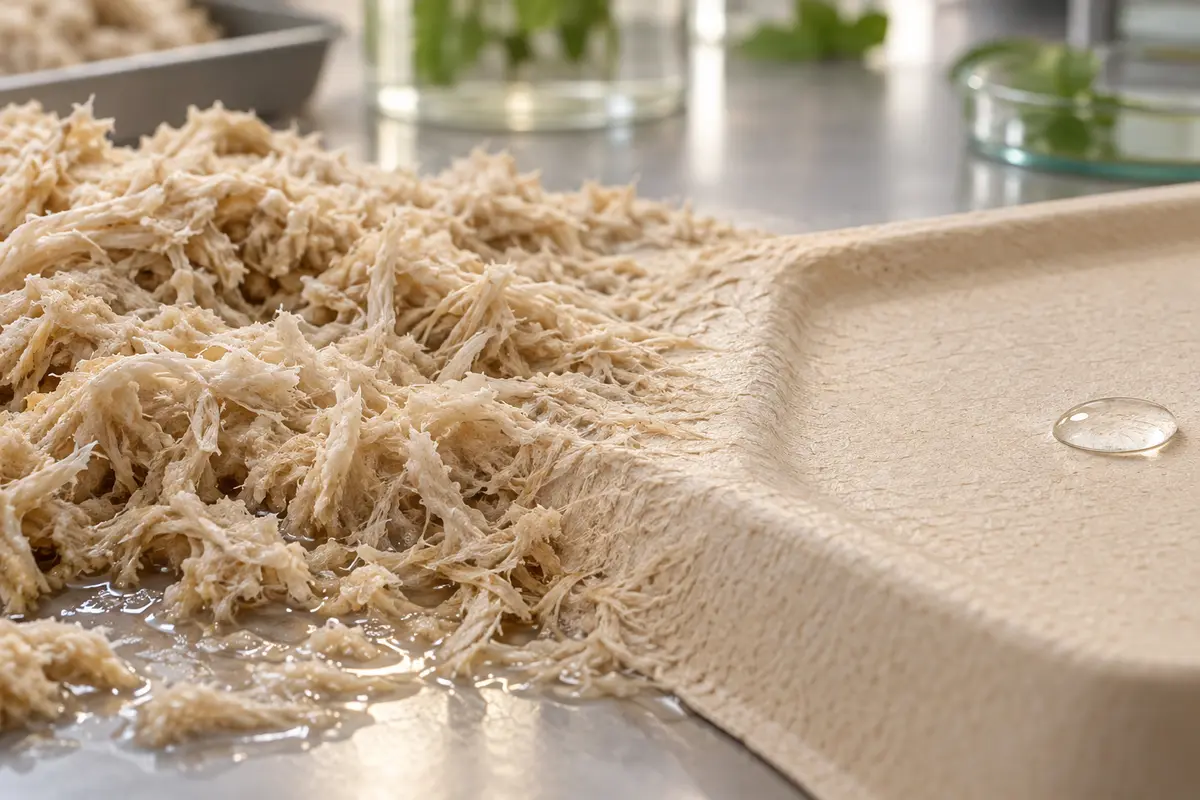
Abstract cellulose fibres dispersing into water. Illustrative context—not a product photograph.
Illustrative context—not a product photograph.

Wood-pulp fibre + bio-based coating · Packaging

PureNil™ 0

SmartSolve · Ohio, United States

Availability
SmartSolve says the substrate entered ramp production in January 2026 and is available for sampling and commercial orders.
Why it caught our attention
It combines fibre, heat sealing and compatibility with established form-fill-seal machinery—potentially reducing the manufacturing changes needed for adoption.
What is reported
SmartSolve describes PureNil 0 as a printable, heat-sealable wood-pulp substrate with a proprietary bio-based coating, intended for selected dry and powdered products and designed to disperse in water.
Evidence limit
Claims including 100% bio-based, plastic-free and water-dispersible remain manufacturer descriptions. Several end-of-life tests are shown as expected or pending, the coating is undisclosed, and application-specific food-contact, barrier and shelf-life testing remains necessary.

Selection method

Attention is not endorsement

We look for a clear bioeconomy-derived input, a real product or credible route to market, a development worth learning from and sources that allow important claims to be attributed. Inclusion does not mean that AgriKinetics has verified every claim or concluded that the product is environmentally preferable overall.

Read the full editorial method →
  1. 01Find

    Search current primary and credible independent sources.

  2. 02Screen

    Check product reality, attribution, duplication and obvious evidence gaps.

  3. 03Explain

    Publish the commercial interest and limitations in plain language.

Suggest a product

What have we missed?

Readers, manufacturers, researchers and supply-chain participants may suggest a product for independent editorial consideration. A suggestion does not guarantee inclusion, influence our wording or create a commercial relationship.

Useful submissions include: the product and organisation name, a direct source link, the bioeconomy-derived material or process, present availability and any supporting evidence.

This static page does not store or transmit these details. The button opens a draft in your email application so you can review it before sending.