
Turning natural biomass resources into sustainable products that reach commercial markets.

Product Radar · Product Radar archive · Week commencing 5 October 2026

Three products that caught our attention this week

A small, deliberately selective window onto products emerging from the bioeconomy, chosen and commented on by David Stone. We describe what has been reported, link to the available sources and make the limits of the evidence visible.

Editorial notice: Product Radar presents bioeconomy-derived products and applications that have caught our attention. Inclusion is editorial discovery, not an AgriKinetics or AKOS endorsement, certification or assessment of overall environmental performance. Manufacturer claims are attributed, and evidence limitations are identified wherever possible.

No placement on this page is sponsored or paid, and none of the links is an affiliate link.

This week’s selection

What interested me this week

Reviewed 5 October 2026

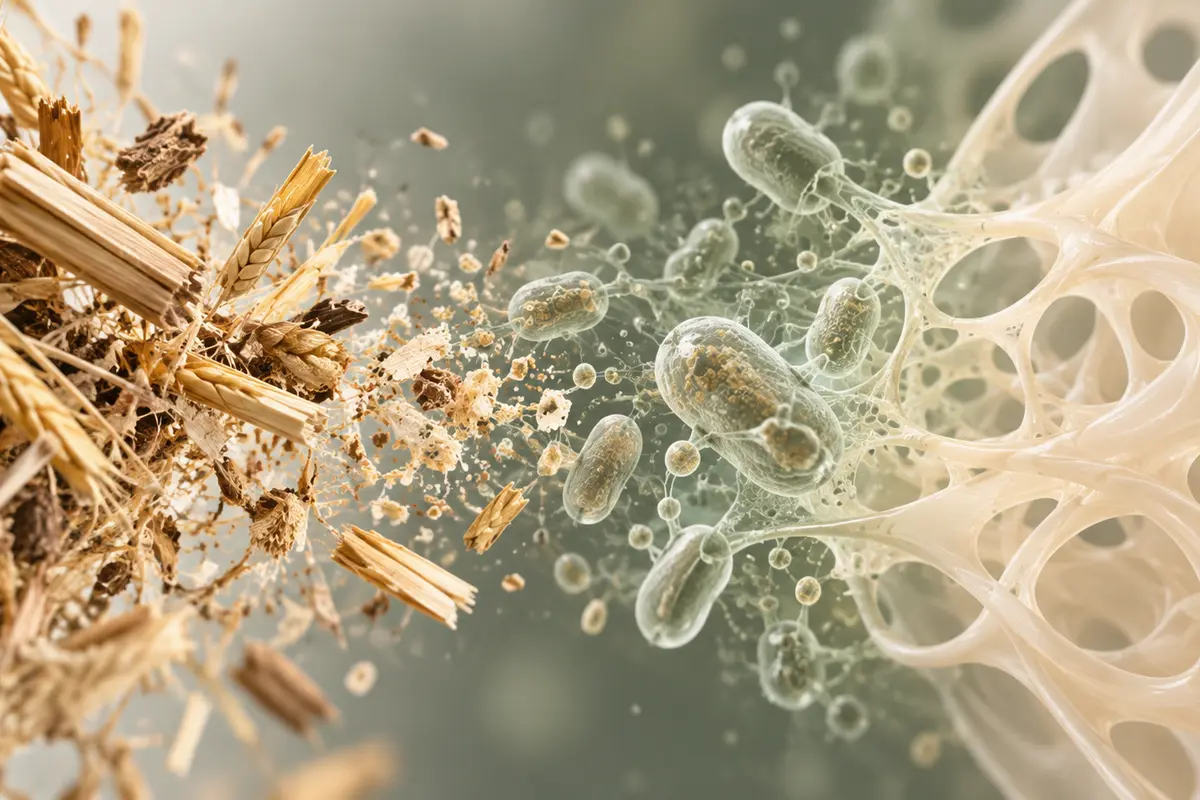
Agricultural by-products, microbial cells and a neutral polymer structure. Illustrative context—not a product photograph.
Illustrative context—not a product photograph.

Fermentation-derived polymer · Cosmetics packaging

Mochi Berrier Moisture Cream in a Vivomer™ jar

KraveBeauty and Shellworks · United States / United Kingdom

Availability
Commercially launched at US$32; the UK page listed £25 but showed “Notify Me When Available” when reviewed.
Why it caught my attention
The packaging is protecting a real water-based cosmetic, so compatibility, sealing, appearance and shelf stability matter—not merely whether an attractive sample can be moulded.
What is reported
KraveBeauty describes the jar and cap as entirely Vivomer, a PHA-based polymer made by microbial fermentation of plant-based industrial and agricultural by-products, and reports TÜV Austria home-compostability certification.
Questions still open
No jar-specific LCA, public certification report, exact feedstock or processing-energy data was located. Vivomer is not yet widely collected for recycling, so disposal outcomes remain dependent on local systems.
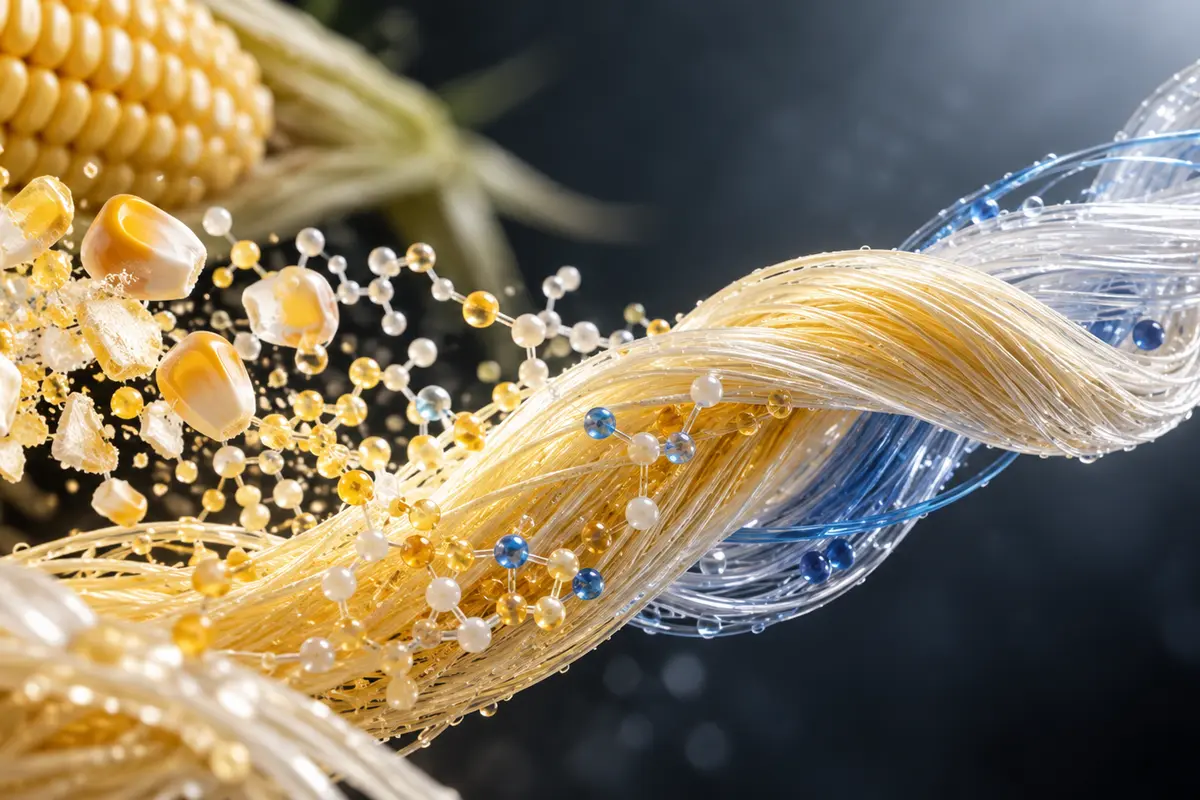
Maize-derived motifs becoming intertwined technical filaments. Illustrative context—not a product photograph.
Illustrative context—not a product photograph.

Renewable-source yarns · Apparel

Oroblù Bio-Derived Sneakers Tights

Oroblù, Fulgar and The Lycra Company · Italy

Availability
Five finished styles were listed through Oroblù’s UK store at £20.
Why it caught my attention
It addresses both parts of the functional yarn combination—polyamide and elastane—in an orderable product where fit, recovery, abrasion and washing must work together.
What is reported
Oroblù reports Q-GEO® polyamide with 46% bio-based material and Renewable LYCRA® EcoMade elastane with 70%, both derived from industrial maize.
Questions still open
No finished-product LCA, total measured bio-based carbon percentage or independent durability dataset was found. End-of-life, fibre shedding and practical recovery of the blend remain unquantified.
Generic polymer flow resolving into a smooth film surface. Illustrative context—not a product photograph.
Illustrative context—not a product photograph.

Bio-based additive · Film extrusion

Incroflo™ P50 polymer-processing additive

Cargill Bioindustrial · Global availability

Availability
Available globally for commercial enquiries and samples; the current update was reported US food-contact clearance.
Why it caught my attention
A low-dose additive is almost invisible, but must maintain film quality, line speed and process stability while replacing a fluorinated processing aid.
What is reported
Cargill reports 86% bio-based carbon by ASTM D6866, typical use at 500–2,000 ppm and improved output in its benchmark trials.
Questions still open
The exact chemistry, remaining fossil fraction and detailed food-contact conditions are not public. The company benchmark has no public independent dataset, and the additive does not make the surrounding polyethylene bio-based or biodegradable.

Selection method

Attention is not endorsement

We look for a clear bioeconomy-derived input, a real product or credible route to market, a development worth learning from and sources that allow important claims to be attributed. Inclusion does not mean that AgriKinetics has verified every claim or concluded that the product is environmentally preferable overall.

Read the full editorial method →
  1. 01Find

    Search current primary and credible independent sources.

  2. 02Screen

    Check product reality, attribution, duplication and obvious evidence gaps.

  3. 03Explain

    Publish the commercial interest and limitations in plain language.

Suggest a product

What have we missed?

Readers, manufacturers, researchers and supply-chain participants may suggest a product for independent editorial consideration. A suggestion does not guarantee inclusion, influence our wording or create a commercial relationship.

Useful submissions include: the product and organisation name, a direct source link, the bioeconomy-derived material or process, present availability and any supporting evidence.

This static page does not store or transmit these details. The button opens a draft in your email application so you can review it before sending.