Turning natural biomass resources into sustainable products that reach commercial markets.

Product Radar archive · Week commencing 21 September 2026

Three products that caught our attention

This edition looked at recycled paperboard as an industrial material, the work behind a familiar packaging change and a cell-cultured food ingredient that remains far too early to judge.

Editorial notice: Product Radar presents bioeconomy-derived products and applications that have caught our attention. Inclusion is editorial discovery, not an AgriKinetics or AKOS endorsement, certification or assessment of overall environmental performance. Manufacturer claims are attributed, and evidence limitations are identified wherever possible.

No placement in this edition was sponsored or paid, and none of the links is an affiliate link.

Previous products

Week commencing 21 September 2026

Reviewed 21 September 2026

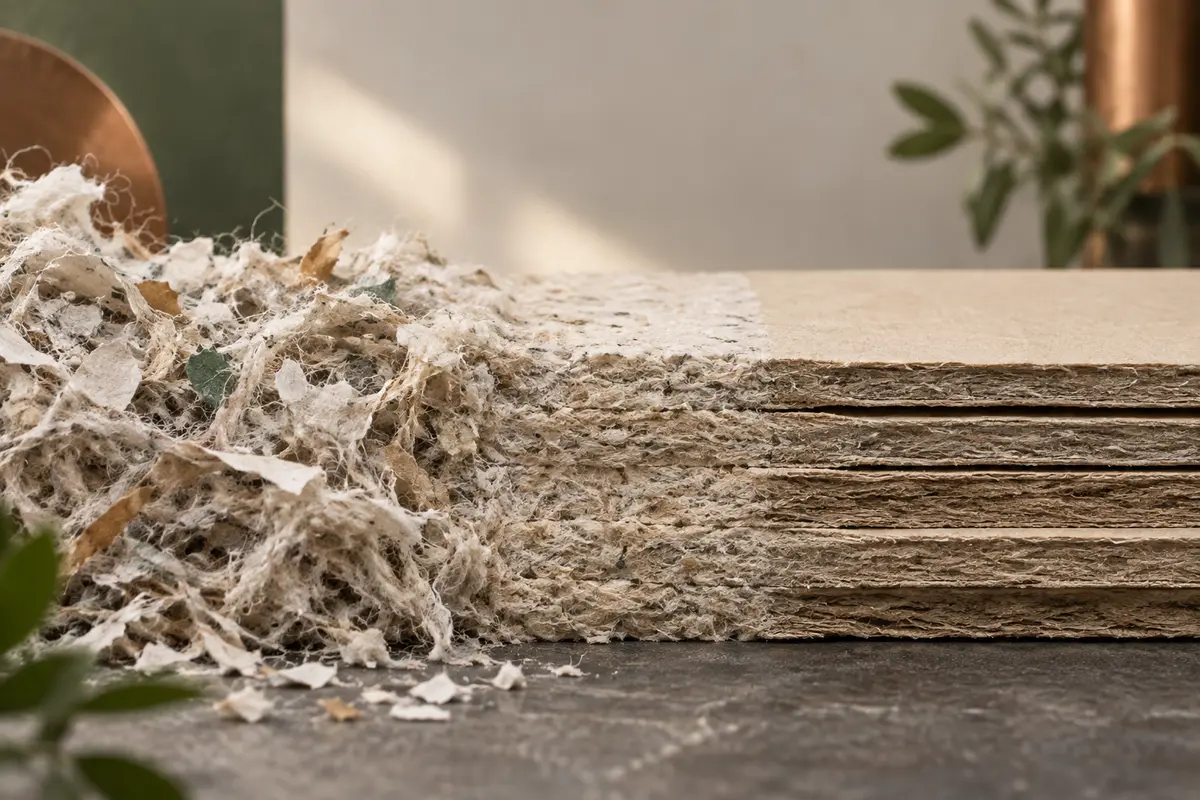
Recycled paper fibres beside layered paperboard. Illustrative context—not a product photograph.
Illustrative context—not a product photograph.

Recycled fibre · Paperboard

PaceSetter Ridgeline™

Graphic Packaging International · Texas, United States

Availability
Graphic Packaging launched the uncoated paperboard in July 2026 and manufactures it at its Waco mill in Texas. It is offered in thicknesses from 14 to 30 points for cartons, trays, laminations, edge protection, tubes, cores and other converted applications.
Why it caught my attention
Recycled fibre is being treated as a serious industrial material, not simply an environmental alternative. The range of possible applications suggests a useful material platform rather than a product looking for one narrow route to market.
What is reported
Graphic Packaging says the board contains 100% recycled fibre, including at least 45% post-consumer material. The company says its recycled fibre content is covered by independently audited RPA100 certification.
Questions still open
Recycled content alone does not prove that one product is environmentally better than another. I could not find a product-specific life-cycle assessment or environmental product declaration. The practical test will be whether the board delivers the required consistency, converting performance and price across its proposed applications.
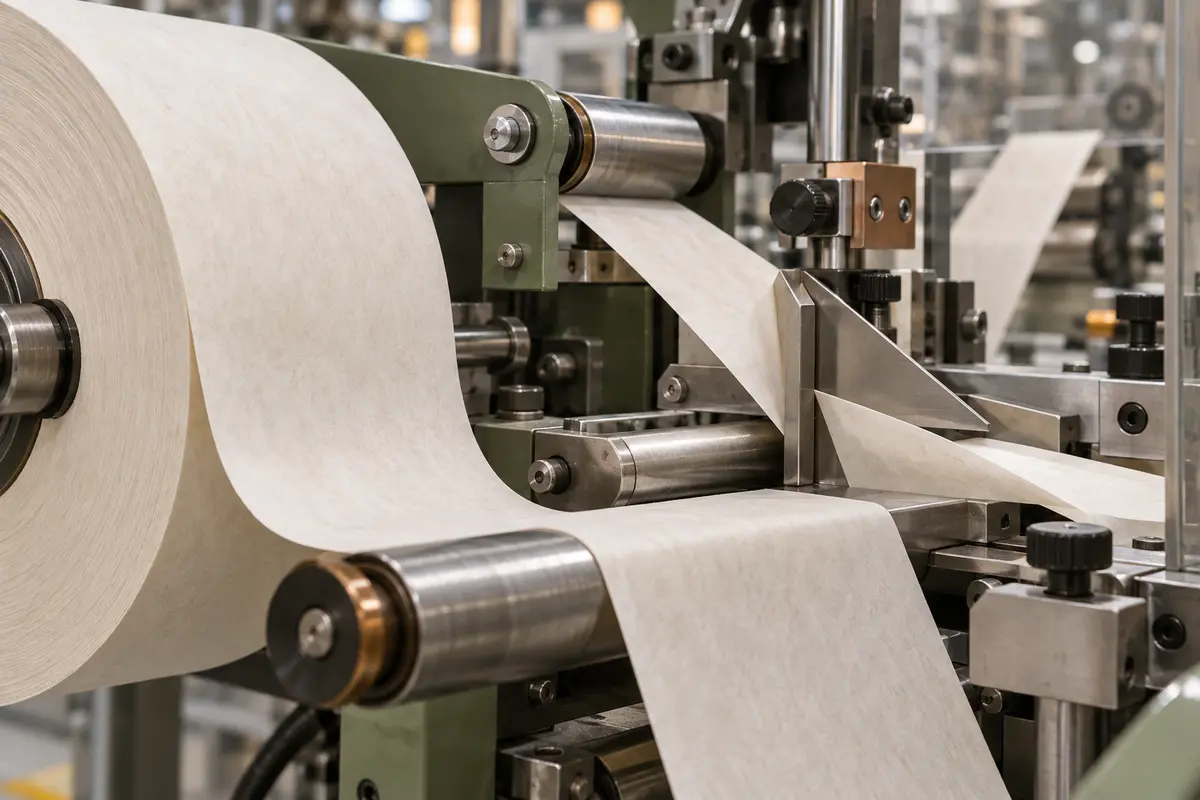
Paper web moving through packaging rollers. Illustrative context—not a Babybel product photograph.
Illustrative context—not a product photograph.

Paper packaging · Food

Babybel® paper outer wrapper

Bel Group · Commercial rollout beginning in the United Kingdom

Availability
Bel has begun replacing the cellophane around each individual cheese with a paper wrapper in the UK. Further markets are due to follow during 2026, with wider international adoption planned for 2027. The red wax shell remains unchanged.
Why it caught my attention
On the face of it, changing a small wrapper sounds straightforward. The reality is rather different. At roughly two billion portions each year, the new material has to protect the cheese and run reliably through production repeatedly and at speed. It is a recognisable example of the industrial work behind an apparently simple substitution.
What is reported
Bel describes the paper as recyclable and responsibly sourced. The company says the change followed several years of development, factory trials and validation under real operating conditions.
Questions still open
The public information does not disclose the complete fibre composition, coating, wet-strength treatment or recycling-test results, and I could not find a product-specific comparative life-cycle assessment. The lesson is as much about implementation as material choice: making a promising material work within an established product and production system is where much of the innovation happens.
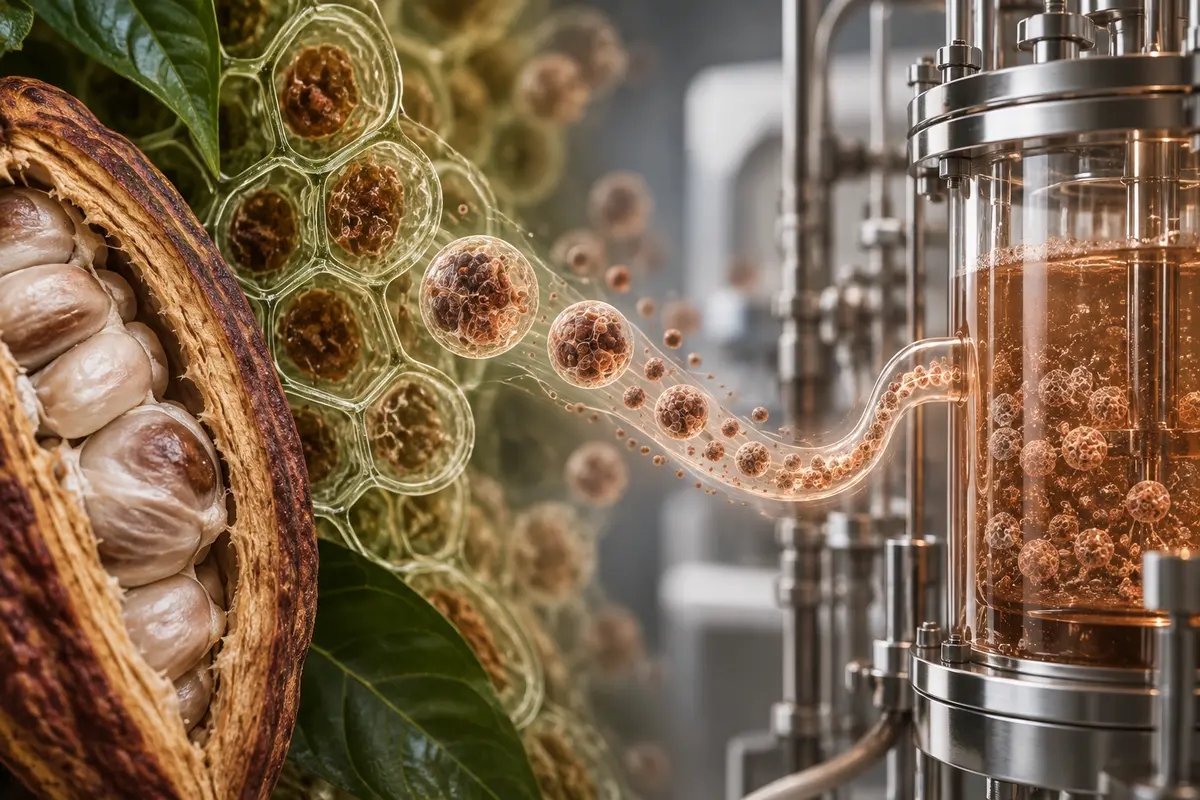
Botanical cocoa cells transitioning into a controlled cultivation vessel. Illustrative context—not a Celleste product or facility photograph.
Illustrative context—not a product photograph.

Cell cultivation · Food ingredients

Cell-cultured cocoa butter trial

Celleste Bio · Israel; manufacturing trial in Birmingham, United Kingdom

Availability
This remains a pilot-stage ingredient. Twelve milk-chocolate bars containing Celleste’s cell-cultured cocoa butter were reportedly made using conventional chocolate-manufacturing equipment at Cadbury’s Bournville facility. The bars are not on sale and regulatory approval has not yet been secured.
Why it caught my attention
This one makes me curious and cautious in roughly equal measure. Producing a useful ingredient without first growing and harvesting the whole crop is genuinely interesting. Testing it within existing chocolate-making equipment also matters because fitting an established process can remove one obstacle to adoption.
What is reported
Celleste cultivates cocoa cells in bioreactors and describes its cocoa butter as a drop-in ingredient for existing chocolate production. The Bournville experiment provides early evidence that the ingredient can be used to make chocolate.
Questions still open
Twelve bars are evidence of an experiment, not a commercial industry. The economics, energy demand and continuous production performance at scale remain open questions. Maybe it will work. Maybe those constraints will prove too difficult. At this stage it is far too early to judge—but it is certainly worth watching.

Archive note

A dated record of what we published

This edition preserves the products, sources and evidence position recorded for its week of introduction. Later corrections or material updates will be identified on the page rather than silently replacing the original editorial record.