
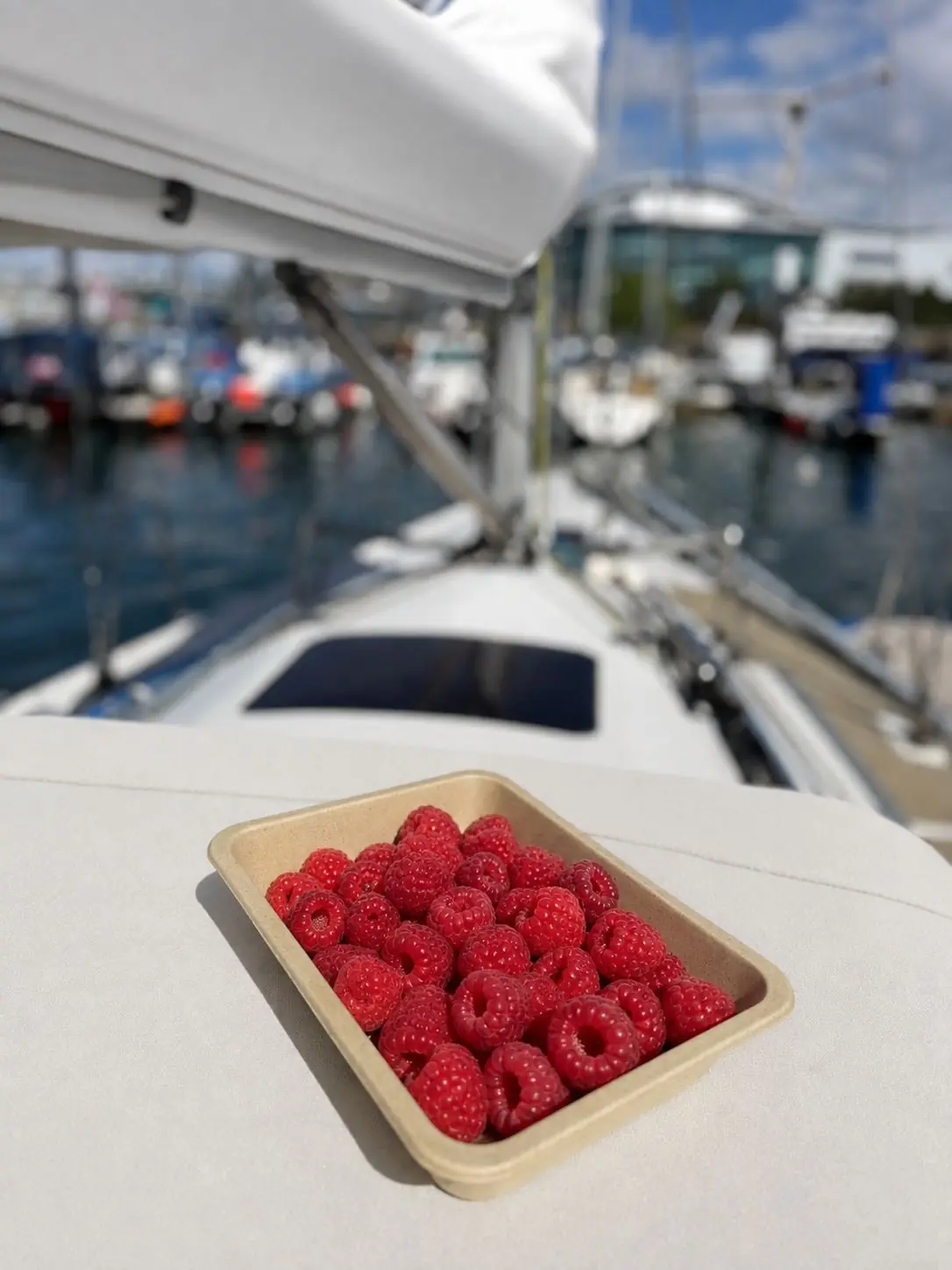
On 12 August 2026, the European Union's Packaging and Packaging Waste Regulation (PPWR) began to apply, with requirements phasing in over time. The European Commission describes the PPWR as covering the full packaging lifecycle and applying across packaging materials and origins. [1] [3]
For anyone working in natural-fibre packaging, the temptation is to read that as straightforward good news: Europe wants less packaging waste, more recycling and better material use, so surely plant-based packaging wins.
Maybe — but not simply because it is made from a plant.
That is actually what I like about the direction of the new rules. They make it harder to hide behind one attractive claim. A tray made from miscanthus, agricultural fibre or wood pulp still has to protect the product, survive the supply chain, meet food-contact requirements where relevant, run through manufacturing at a sensible rate and cost, and have a credible life after use.
In other words, “it is plant-based” is the start of the conversation, not the answer.
For the bioeconomy, that is both the opportunity and the warning. Biology can provide an excellent feedstock, but the winning proposition is the whole system around it: where the material comes from, how it is processed, how the pack performs, what it costs and what really happens after use.
The regulation in one view
*The legal text contains “whichever is later” timing clauses linked to the relevant delegated and implementing acts. Treat 2030 and 2035 as planning milestones, not unconditional start dates.
Plant-based is not the same as sustainable
If somebody tells me a new pack is renewable, biodegradable and has a much lower carbon footprint, my first reaction is that it sounds promising. My second reaction is a string of questions.
What is the feedstock? Where does it come from? How is it grown or collected? What processes turn it into the finished product? What happens to water and process chemicals? How are people treated through the supply chain? How does the pack perform against the plastic or fibre pack it is replacing? And what actually happens to it at end of life?
The carbon claim is interesting too. Where are the emissions being reduced, and why? Is the comparison fair? An LCA can be extremely useful because it exposes the process and shows where improvement is possible, but only if the inputs and baseline reflect reality.
The PPWR applies across packaging materials, although some of its provisions are material-specific. What it does not do is give a fibre pack a free pass simply because its starting material grew in a field or a forest. I think that is healthy. It pushes development towards evidence rather than labels.
The awkward bit is often not the fibre
For food packaging in particular, the difficult part can sit between the fibre and the product it is supposed to protect. Grease resistance, moisture resistance, oxygen barrier, sealing, cold-chain performance, migration, odour and printability may all depend on coatings, liners, sizing agents or treatments.
That is where an apparently simple sustainability story can become complicated. A pack may be mostly fibre and still be difficult to recover if the barrier system causes trouble in sorting or pulping. Equally, a technically excellent coating is not a complete solution if it creates a problem somewhere else in the system.
From 12 August 2026, food-contact packaging containing PFAS at or above the limits set in Article 5(5) of the PPWR cannot be placed on the EU market. [3] That makes chemistry and supplier evidence something to think about at the beginning, not something to tidy up when the prototype is already finished.
There is another milestone worth watching. The PPWR's headline recyclability milestones are 2030 and 2035: design-for-recycling performance grades A, B or C are introduced from 2030, while recycled-at-scale is added to the assessment from 2035. The legal text includes “whichever is later” timing clauses linked to the relevant delegated and implementing acts, so businesses should treat 2030 and 2035 as planning milestones rather than assume every requirement begins on exactly 1 January of those years. [3]
For a natural-fibre developer, that makes the coating, liner, adhesive and collection route just as important as the fibre itself.
Recyclable on paper, or recycled in practice?
“Recyclable” is an easy word to use. The harder question is whether the item can enter a waste stream that people actually use, be sorted, and then be recovered at useful scale.
This matters because a technically perfect end-of-life route may be useless if people cannot access it. I love home-compostable products, for example, but we live in a largely urban society and many packs will never make it into a home compost bin. The infrastructure and the behaviour both matter.
Where possible, I would rather design a product so that it can fit an existing mainstream recycling route than build a business case on the hope that an entirely new collection system will appear.
For moulded or thermoformed fibre, that means paying attention to things such as fibre yield, wet strength, repulpability, coating release, residues and contamination. Non-wood fibres can be very attractive, but they still have to work with the equipment and systems downstream.
The UK rules are different, but the commercial lesson is similar
The PPWR is an EU regulation and is directly applicable in EU Member States; it is not UK domestic law. UK producers and brands have their own extended producer responsibility (EPR) requirements, while UK businesses placing packaging on the EU market also need to understand the European rules relevant to their role. [3] [4]
Under current GOV.UK guidance, an organisation is an obligated packaging producer if it is established in the UK, carries out a relevant packaging activity, supplied or imported more than 25 tonnes of packaging in the UK in the previous year, and had annual worldwide turnover of £1 million or more. [4]
To me, the wider message is more interesting than the paperwork. Packaging data is becoming part of the product. What it is made from, how much is used, what claims are being made, who is responsible for it and what evidence supports those claims all need to be understood properly.
So where does miscanthus fit?
I have always thought we ask the wrong question when we treat miscanthus simply as another fibre trying to imitate wood pulp.
Trees take many years to grow and are important to nature, landscapes and the environment. This is not an argument against responsibly managed forestry; wood fibre is important and already works extremely well in many applications. It is an argument for asking whether forest fibre needs to be the default everywhere. If a perennial crop can provide useful cellulose and fibre, can be grown close to processing and generate income for a grower far sooner, why would we not explore where it can sensibly add another feedstock option?
That does not mean miscanthus automatically wins. The underlying credentials still matter: cultivation, transport, pulping chemistry, energy, water, additives, forming, drying, conversion and end of life. The product still has to perform and the customer still needs a reason to change.
But that is where the interesting work starts. Miscanthus can potentially be much more than a single low-value biomass stream. Cellulose, hemicellulose and lignin can all have value if the processing route and economics make sense. The opportunity is to find the combination of feedstock, processing, product performance and market need that creates the most value.
AgriKinetics commentaryMiscanthus does not need a miracle-crop story. It needs a job to do, a customer who values that job, and evidence that it can do it repeatedly at the right cost.
What would I want to know before spending serious money?
Before buying production equipment or deciding that a material is ready for scale, I would want some fairly ordinary questions answered:
- What job must the pack actually do, for how long and under what temperature, humidity and handling conditions?
- Who is the customer, why would they change, and how can we make a first trial easy?
- Is direct food contact intended, and what hygiene, migration, chemistry and traceability evidence is needed?
- Which functions come from the fibre and which depend on coatings, additives, liners or seals — and do those choices still fit the intended recovery route?
- What is the realistic end-of-life route, not merely the technically possible one, and does the existing infrastructure support it?
- What evidence supports the environmental claims, and are the baseline, system boundaries and comparisons fair?
- Can the process repeatedly hit the required performance at a real cost that includes cycle time, energy, water, yield, scrap and labour?
- What is still unknown, and can a pilot answer it before we commit serious capital?
None of that is intended to slow innovation down. Quite the opposite. It is usually much quicker to ask the awkward questions early than to discover them after a customer trial or after expensive equipment has been ordered.
A good pilot should help technically and commercially. It should make enough product for real users to criticise, show where manufacturing starts to hurt, and provide evidence for the next investment decision. I distrust market research when there is nothing tangible for the customer to critique: saying you like a sustainable product is rather different from putting your hand in your pocket and buying it. If the idea works, scale it. If it does not, use what was learned and look at where else the material or process may create value.
The prototype should travel with its evidence: what the customer asked for, what formulation and process were used, how it performed, what failed, what is still uncertain, what it is likely to cost and what happens after use. The point is not paperwork for its own sake; it is to make sure the next decision is based on what actually happened.
The failures belong in the record as well. We are human; no one is infallible. A failed experiment tells us what not to repeat and, every now and again, gives us one of those useful “Eureka” moments in a direction we were not expecting.
What I think the PPWR really changes
The PPWR will not settle every question immediately. The Commission is still adopting secondary legislation and publishing implementation guidance and FAQs, so details will continue to develop. [1] [2] But I do not think that is a reason to wait for perfect certainty before doing sensible development work.
The direction is already useful. Minimise unnecessary packaging. Avoid problematic chemistry. Think about recovery before the pack is finished. Keep the evidence. Work with existing supply chains where you can rather than expecting everybody else to change around you.
And do not expect a customer to switch simply because the new pack is greener. What is in it for them? Does it work, is the total cost sensible, and is the change easy enough to justify?
If those answers are strong, sustainability becomes an important part of a genuinely useful proposition rather than the whole proposition.
AgriKinetics commentaryThe opportunity is not to win an argument about which raw material sounds greenest. It is to build a packaging system that works for the product, the buyer, the manufacturer and the end-of-life route — and then prove it.
The opportunity
I think this creates a better test for serious natural-fibre development. It removes some of the easy marketing shortcuts. The companies that succeed will not necessarily be those with the longest list of possible applications or the loudest sustainability claims. They will be the ones that take a useful application, make it work, prove it, repeat it and then scale without losing what made it valuable in the first place.
Miscanthus and other regional fibres deserve to be part of that search, alongside responsibly sourced wood fibre and other viable feedstocks. We will learn a lot on the way, there will be obstacles, and some routes will lead somewhere different from where we first expected. That is innovation.
For now, the useful question is quite simple: can we turn the material into something a customer genuinely wants, at a cost and with an end-of-life story that stand up to scrutiny? If we can, we move forward one increment at a time.
Primary sources
Regulatory statements were checked against the official sources below on 13 September 2026. Commercial, product-development and miscanthus passages are AgriKinetics commentary, not legal advice or settled comparative environmental claims.
- European Commission — Packaging waste overview. Scope, lifecycle coverage, application date, implementation resources and the 2030 recyclability objective. Read the official source.
- European Commission — PPWR Frequently Asked Questions. Official implementation FAQ published 3 August 2026. Read the official source.
- EUR-Lex — Regulation (EU) 2025/40. Authoritative legal text. Article 5 covers PFAS limits; Article 6 and Annex II cover recyclability grades, milestones and timing clauses. Read the Regulation.
- GOV.UK — Check if you must comply with EPR for packaging. Current UK producer activities, thresholds and small/large producer classification; updated 19 August 2026. Read the official guidance.