
A product, not simply a feedstock
It is easy to talk about biomass in tonnes, hectares and fibre characteristics. Those measures matter, but none of them is the finished proposition. A customer buys a tray, a panel, a packaging component or a building product—not a field of potential.
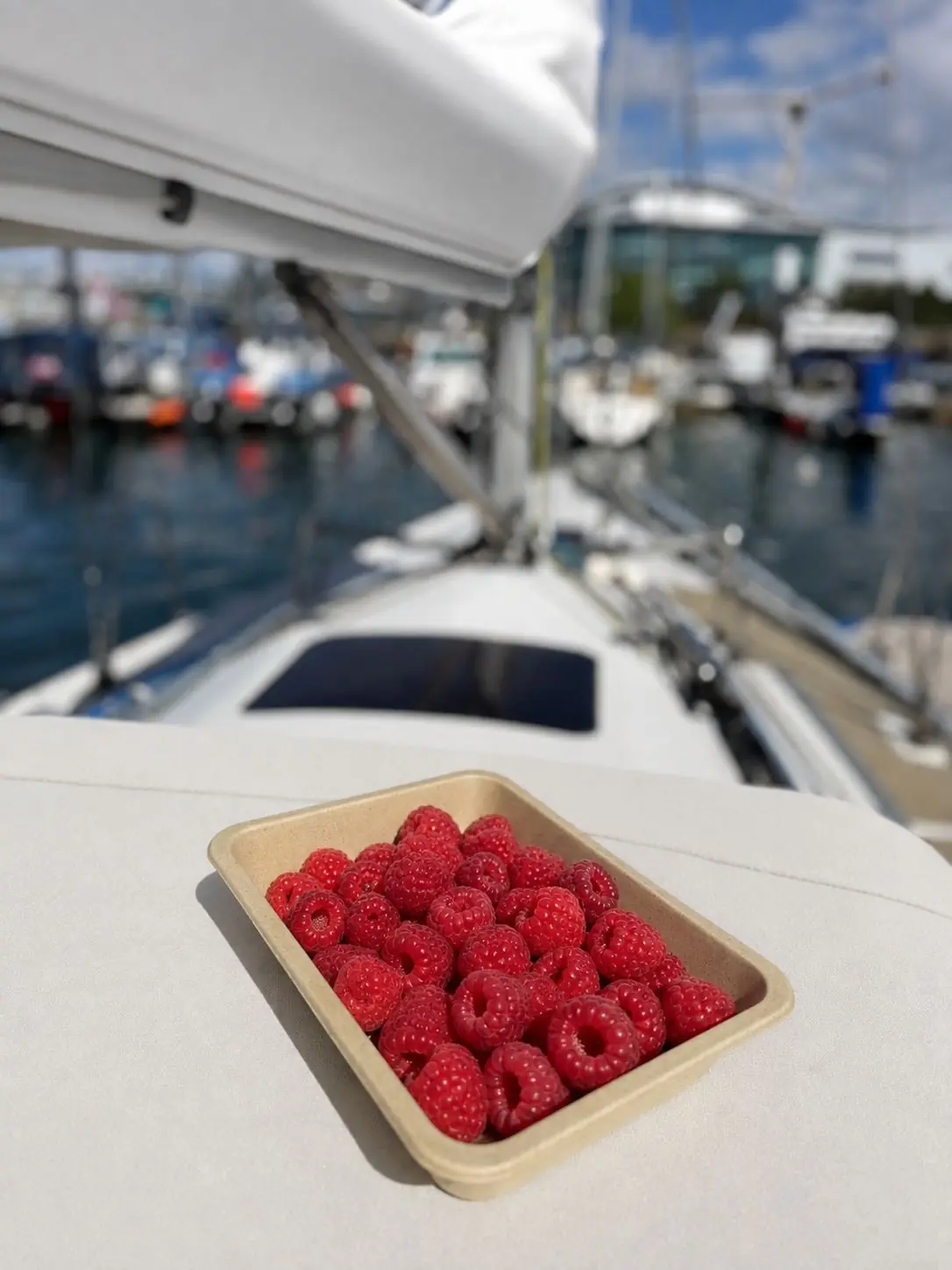
The tray in this photograph gives the discussion a useful human scale. It has a clear job, sits naturally beside the product it carries and can be understood without a technical presentation. That apparent simplicity is the end of a much more demanding chain of decisions.
The commercial value is not created by biomass alone. It is created when the right biomass, process, product and market work together.
Why this matters for the bioeconomy
Products like this can help shift renewable fibre from an abstract sustainability story into something buyers can evaluate. They also expose the questions that determine whether an attractive prototype can become a dependable business.
Does it perform for the intended contents? Can it be manufactured consistently at the required speed? Is the product competitive once tooling, energy, transport, rejects and quality control are counted? Can the fibre supply remain consistent as volume grows? And are any environmental claims supported by evidence for the actual product and its real route after use?
Those questions are not a reason to dampen enthusiasm. They are how enthusiasm is turned into a commercial plan.
Where miscanthus may fit
AgriKinetics is particularly interested in the route from crops such as miscanthus to higher-value products. A perennial fibre crop may offer useful material and supply-chain characteristics, but relevance has to be established for each application. Fibre preparation, formulation, forming behaviour, surface finish, product safety, performance and end-of-life all need to be considered together.
The photograph does not prove those points on its own, and we should not ask it to. What it does is make the destination visible: a recognisable product in a recognisable market. From there, the work can be framed around evidence rather than possibility alone.
Our view: start with the use, then work backwards
There is a temptation in biomass development to begin with the crop and search for somewhere to put it. Stronger opportunities usually begin with a customer problem and work backwards: what must the product do, what will the buyer accept, which manufacturing route can deliver it, and which renewable feedstock is genuinely suitable?
This is the direction we want AgriKinetics to keep pursuing—helping natural biomass resources become sustainable products that can reach commercial markets, while being candid about the work still required. A modest tray of raspberries may not look like a grand bioeconomy statement. In many ways, that is the point. Progress becomes meaningful when the material stops being the story and starts doing a useful job.