
February has been a busy month for the UK biomass sector, with significant policy developments, new grant announcements, and continued progress in Miscanthus-based construction materials. Here is our monthly round-up of the key stories and what they mean for growers, landowners, and the wider Miscanthus supply chain.
Government Grants: FETF 2026 and SFI Energy Crops Update
The Farming Equipment and Technology Fund (FETF) 2026 round is set to open on 17 March 2026, offering grants for productivity-boosting equipment across arable, horticultural, and livestock sectors. Biomass-related equipment — including chippers, balers, and handling systems — has featured in previous FETF rounds, and growers should check the updated item list when it is published.
Separately, the Sustainable Farming Incentive (SFI) continues to develop its offer for energy crops. DEFRA's farming blog confirmed in February that the 2026 SFI application window for small farms will open in June 2026, with a wider rollout later in the year. The Energy Crops Scheme (ECS) remains the primary route for establishment grants covering 50% of setup costs for Miscanthus and Short Rotation Coppice (SRC), including ground preparation, planting stock, fencing, and first-year cutback.
The ADOPT Round 6 (Adding Value to the Arable Rotation through Diversification, Optimisation and the Promotion of Technology) also closed for expressions of interest in February, with funded projects expected to support demonstration of perennial biomass crops alongside conventional arable rotations.
For growers considering Miscanthus, the combination of ECS establishment grants, SFI annual payments, and long-term biomass supply contracts makes the financial case for planting in spring 2026 compelling.
Further reading: DEFRA Farming Blog · ADOPT Round 6 (GOV.UK)
Biomass Sustainability Framework: Consultation Closes
The UK Government's consultation on the Biomass Sustainability Framework closed on 27 February 2026. The framework sets out proposed criteria for how biomass used in energy generation must demonstrate greenhouse gas savings, land-use sustainability, and supply chain transparency.
For Miscanthus growers, the outcome of this consultation is significant. Perennial energy crops like Miscanthus Giganteus already perform well against sustainability criteria — they require no annual replanting, minimal fertiliser inputs, and deliver strong carbon sequestration through root biomass and soil organic matter accumulation. The framework is expected to reinforce the position of domestically grown perennial crops as a preferred feedstock compared to imported wood pellets, and the final policy (expected later in 2026) could unlock further incentives for UK-grown biomass.
Biomass Connect: Demonstrator Hub Updates
The Biomass Connect programme, funded through the government's £1 billion Net Zero Innovation Portfolio, provided its winter update from eight demonstrator hubs across the UK. Sites in Ceredigion, South Ayrshire, Buckinghamshire, Devon, Edinburgh, County Down, Northumberland and Yorkshire reported that Miscanthus and SRC crops had entered full senescence, with preparations underway for spring maintenance and phenotyping.
The programme's Phase 2 innovation projects continue to deliver results. The Miscanspeed project, funded by the Department for Energy Security and Net Zero, is using genomic selection and speed breeding to dramatically reduce the time needed to develop improved Miscanthus varieties — from the traditional 10–15 year cycle down to as little as 3–5 years. Led by IBERS scientists at Aberystwyth University, the aim is to produce seed-based Miscanthus hybrids that can be drilled rather than planted as rhizomes, slashing establishment costs and opening the door to much larger-scale adoption.
Further reading: Biomass Connect (biomassconnect.org)
Europe: €170.7 Million for Bio-Based Innovation
Looking across the Channel, the Circular Bio-based Europe Joint Undertaking (CBE JU) published its 2026 Annual Work Programme with €170.7 million in funding for new research and innovation proposals. The call for proposals opens on 23 April 2026 and closes on 22 September 2026.
Among the 13 funded topics are several directly relevant to Miscanthus value chains: biotech routes for valorising residual biomass (€14m), bio-based chemicals and materials from woody residues (€14m), high-performance bio-based thermosets (€14m), and breakthrough sustainable bio-based textile fibres (€6.5m). Miscanthus fibres have already been demonstrated as feedstock for biocomposites, platform chemicals like HMF, and biodegradable polymers through the earlier EU-funded GRACE project — and these new calls could fund the next wave of commercialisation.
For UK-based researchers and companies, participation in CBE JU calls is possible through Horizon Europe association, making this a significant funding opportunity for the Miscanthus supply chain on both sides of the Channel.
Further reading: CBE JU 2026 work programme (cbe.europa.eu)
Miscanthus in Construction: Miscrete, Bio-Concrete and Fibreboard Progress
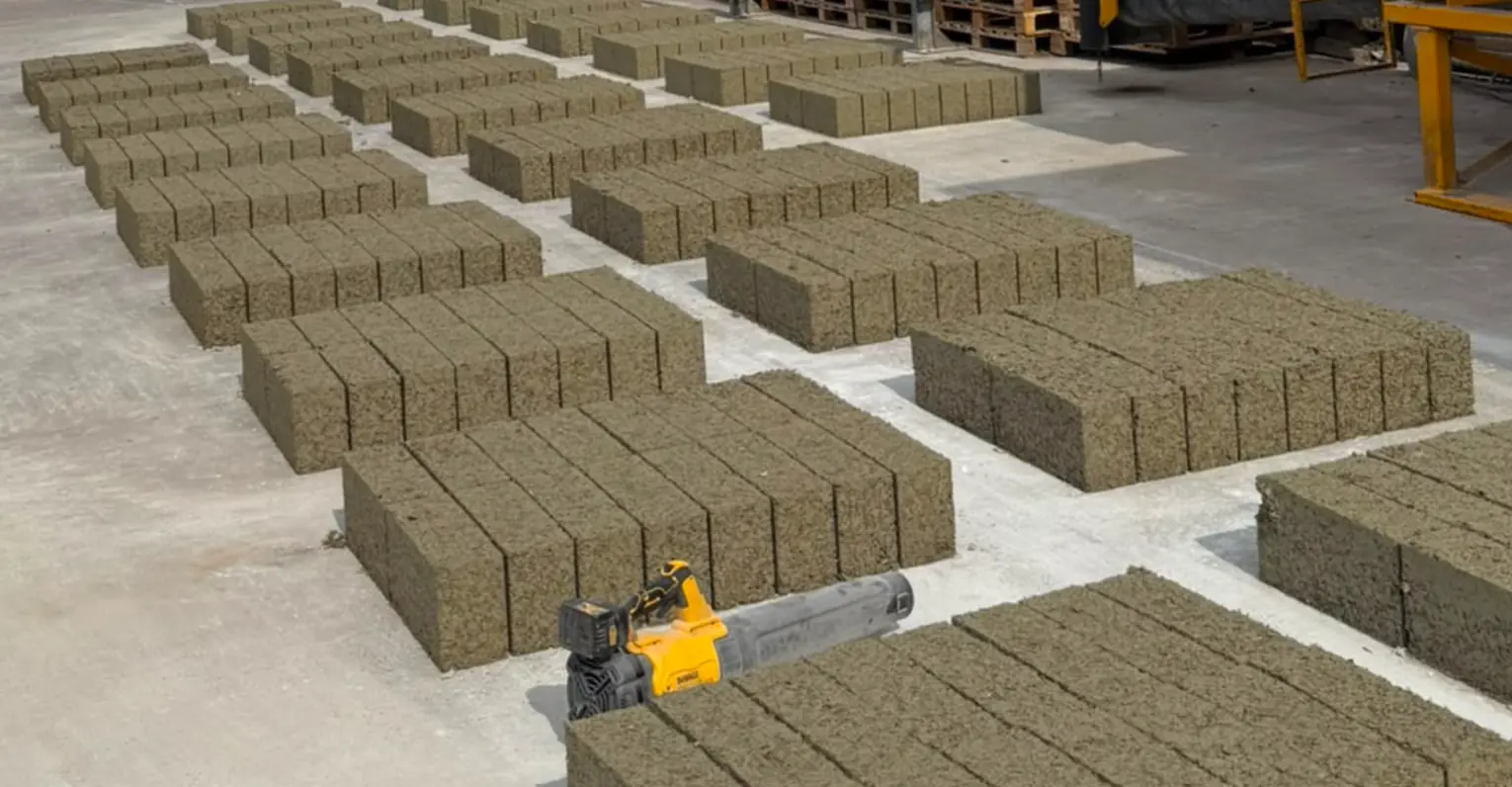
The development of Miscanthus-based construction materials continues to gather pace. Miscrete — a building block manufactured by AgriKinetics' partners Ty-Mawr, the sustainable building materials specialists based in Wales — uses Miscanthus fibres as a key component, offering a lightweight, carbon-sequestering alternative to conventional concrete blocks. Alongside Miscrete, Econcreed (a bio-concrete incorporating Miscanthus fibres) is now in commercial production, while fibreboard prototypes and acoustic panels are progressing through industry trials. These products have generated strong interest from architects and developers at recent trade events, as the sector searches for carbon-negative building materials.
Construction represents one of the highest-value end markets for Miscanthus fibre. With Miscanthus biomass currently fetching around £75–90 per tonne on long-term energy supply contracts (with annual RPI-linked increases), the potential returns from biocomposite and construction applications are considerably higher — natural fibres for composites and building products can achieve approximately £400 per tonne, representing a roughly fivefold premium. As the UK construction industry faces increasing pressure to decarbonise under the Future Homes Standard and Building Safety Act, demand for bio-based materials like Miscrete is expected to grow significantly in the years ahead.
Further reading: Biocomposites (AgriKinetics) · Ty-Mawr Sustainable Building Materials
MERIT Project: Miscanthus for Ukraine's Energy Security
In a remarkable international development, the MERIT project — funded by the UK's Foreign, Commonwealth & Development Office through Innovate Ukraine — is now underway to help Ukraine rebuild its energy infrastructure using Miscanthus. The project will cultivate Miscanthus on abandoned and war-damaged land to supply renewable energy plants and produce advanced construction materials for rebuilding.
Led by UK research partners and biomass specialists, MERIT demonstrates the versatility of Miscanthus as both an energy crop and a tool for land remediation. Miscanthus Giganteus has proven ability to grow on contaminated and degraded soils — extracting pollutants, stabilising ground, and building soil organic matter — making it ideally suited to post-conflict landscapes.
2026 Planting Season: Order Deadlines Approaching
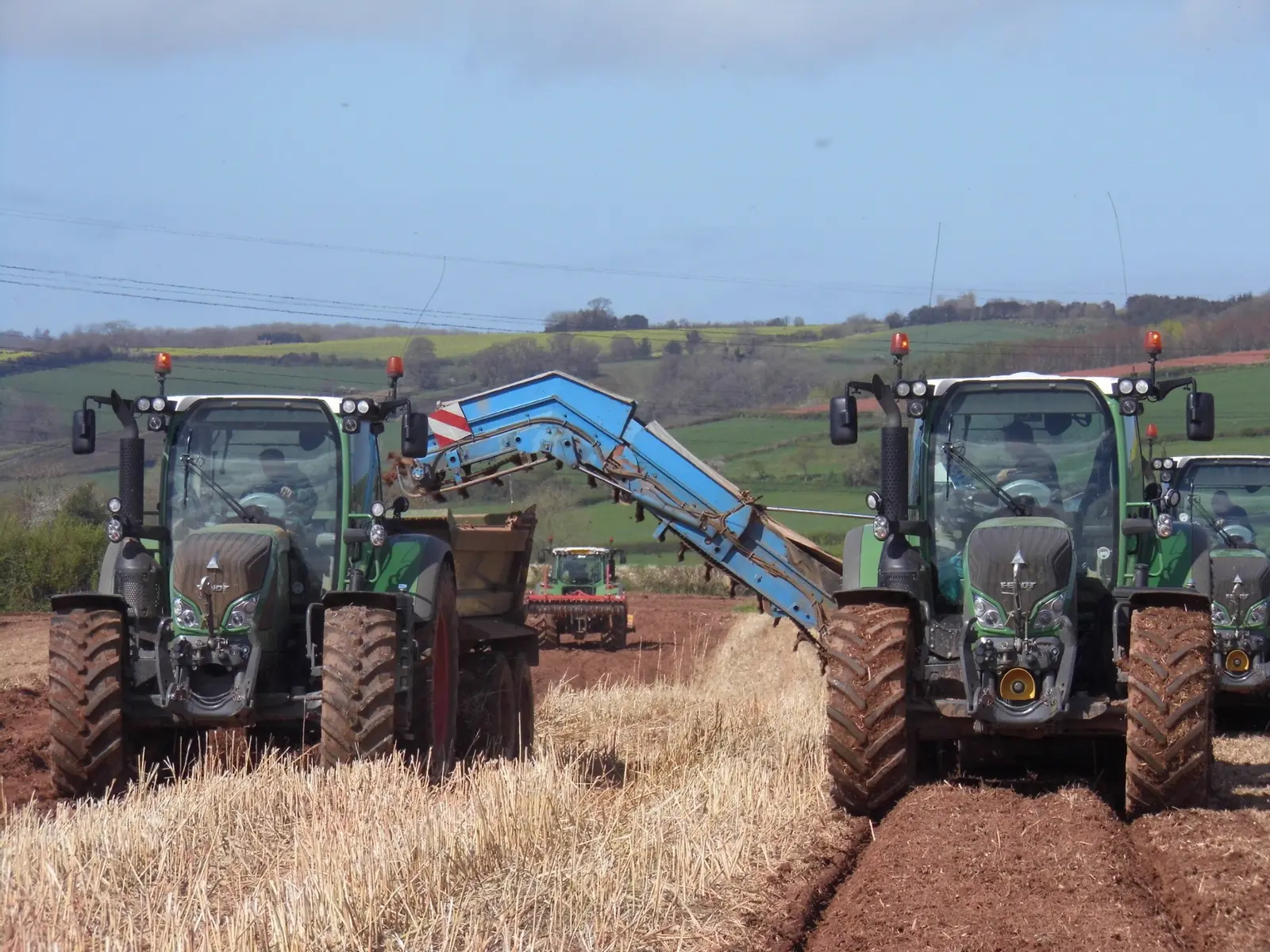
With spring approaching, the window for planting Miscanthus Giganteus is opening. Rhizome deliveries for the 2026 season are expected in April/May, with the last order date of 30 April 2026 (subject to stock availability). Planting density is typically two rhizomes per square metre, and ground preparation should ideally begin now with herbicide application and sub-soiling to control perennial weeds and relieve compaction.
For landowners considering Miscanthus for the first time, the Energy Crops Scheme (ECS) offers establishment grants covering 50% of setup costs, including ground preparation, planting stock, fencing, and first-year cutback. Combined with SFI payments and the long-term income from biomass sales, the financial case for planting in spring 2026 is strong.
Further reading: Energy Crops Scheme (GOV.UK)
Coming Up in March 2026
- 17 March: FETF 2026 applications open
- April/May: Miscanthus rhizome planting begins across the UK
- 21–23 April: Argus Biomass Conference, London — featuring sessions on policy, BECCS, sustainable aviation fuel, and novel feedstocks
- 23 April: CBE JU 2026 call for proposals opens
- June: SFI 2026 first application window opens (small farms)
AgriKinetics Ltd is a Miscanthus Giganteus specialist working with farmers, landowners, and industry to develop the UK's biomass supply chain. For advice on planting, grants, and market opportunities, contact us.