
There are moments when one number tells us rather more than a press release intended. On 23 September, Circular Bio-based Europe reported that its 2026 funding call received 272 proposals requesting €1.65 billion. The money available was €170.7 million. [1]
On the face of it, that is excellent news. It shows energy, technical imagination and a sizeable pipeline of people trying to turn biological resources into useful products. Residual biomass, circular packaging, coatings, chemicals, textile fibres and biorefineries are all in the mix.
But the numbers also deserve a second look. The available budget is only about one tenth of the amount requested. That does not give us a likely success rate—projects vary in size, eligibility and evaluation quality—but it does tell us that a credible bioeconomy proposal now sits in a very crowded room.
The interesting pressure is in the practical topics
Some of the most heavily contested areas are very close to the work many of us are already doing. Thirty-four proposals sought €214.6 million for the valorisation of residual biomass, against a €14 million topic budget. Twenty-five proposals sought €149 million for films and coatings for circular packaging, again against €14 million. Thirty-five textile-fibre proposals requested €111.5 million from a €6.5 million topic budget. [1]
Those are not small gaps. They suggest plenty of technical possibility—and a need for much sharper choices about which propositions deserve to move forward.
The EU’s AgRI 2040 conference, held on 24 and 25 September, points in the same direction. Its stated focus includes deploying and scaling solutions, improving uptake by farmers and foresters, and translating research needs into practical solutions and market opportunities. I think that wording matters. Research is essential, but the value appears only when something useful can be made, adopted and paid for. [2] [3]
A biomass supply is not yet a business
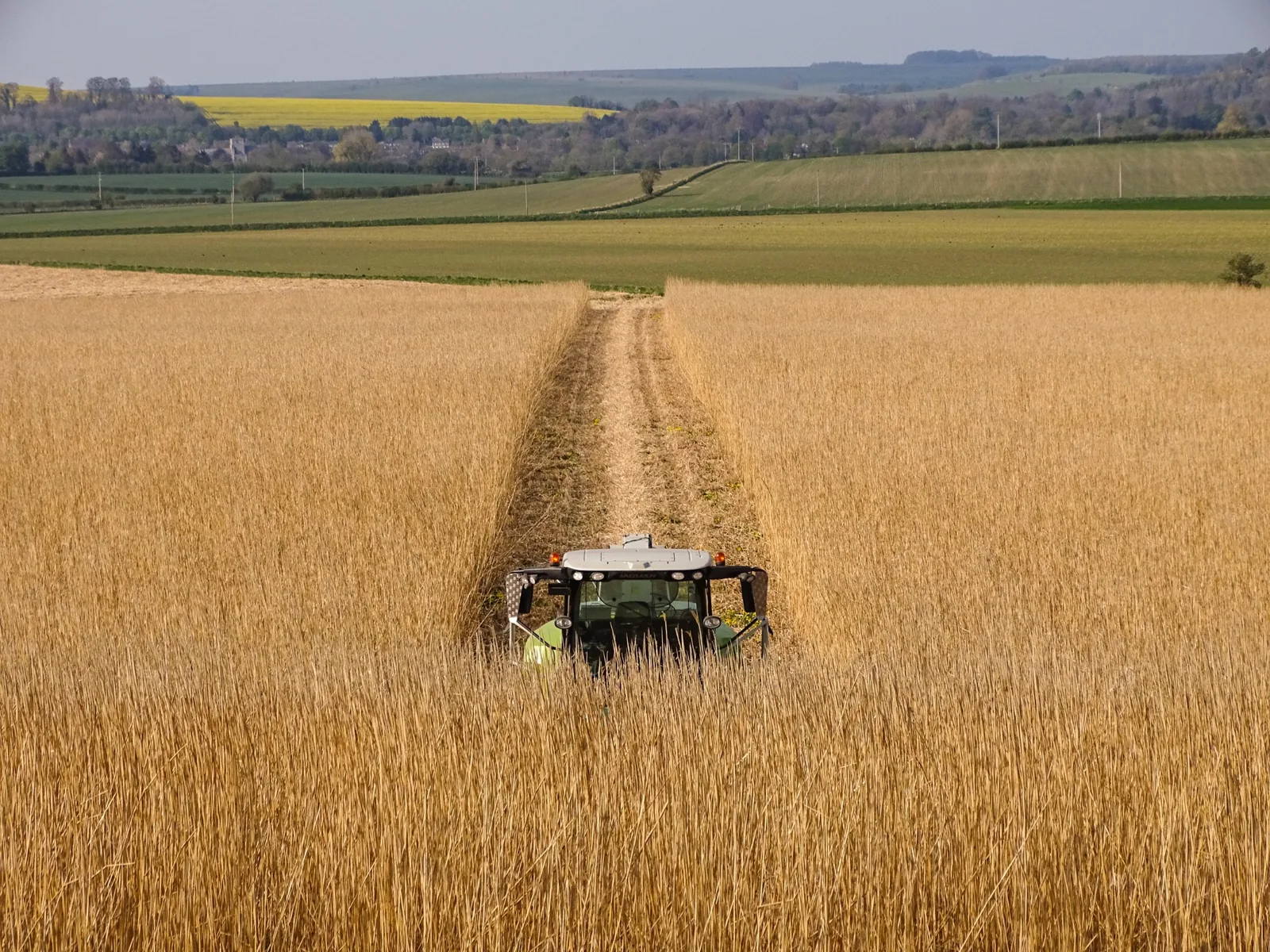
In the bioeconomy, it is easy to begin with the material. We have straw, miscanthus, wood residue, reeds, grass, food-processing waste or another underused resource. Surely we should make something from it?
Maybe. But availability is only the start of the question.
Where is the feedstock, who controls it, how variable is it, what moisture and contamination arrive at the factory gate, and what does it cost after harvesting, storage and transport? If the proposed product needs a beautifully consistent fibre but the incoming crop changes with soil, season and handling, who carries that risk?
For the farmer or landowner, the question is equally direct: what is in it for me? A new crop or residue contract must offer a credible return, workable agronomy, understandable quality requirements and confidence that the buyer will still be there. Calling the arrangement a resilient value chain does not, by itself, make one.
A laboratory result is not a manufacturing route
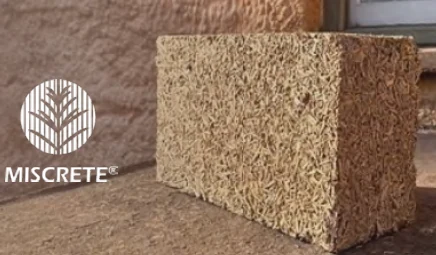
Then comes the process. Can it tolerate real feedstock rather than the carefully selected material used in development? What happens to water, energy, chemicals and co-products? Can the plant run continuously, and can ordinary operators keep it within specification? How much cleaning, drying, separation and quality control sits between the appealing input and the saleable output?
This is often where a technically possible product meets the less glamorous world of cycle time, yield, downtime and maintenance. The machinery is not being awkward; it is simply declining to read the brochure.
A good pilot should therefore do more than produce a handsome sample. It should expose variability, record mass and energy balances, identify waste streams, establish repeatable specifications and show where cost actually accumulates.
The customer does not buy the feedstock story
The customer may welcome renewable content, but usually buys performance and reduced risk. Does the packaging protect the product on the existing line? Does the insulation meet fire, moisture and thermal requirements? Does the construction material install without special training? Does the coating provide the barrier performance for the required shelf life—and can it still be recycled in the system that actually exists?
Price matters, but total value matters more. A product may justify a higher unit cost if it removes another component, reduces damage, improves handling, lowers compliance exposure or creates a benefit the customer can measure. Equally, an attractive carbon story will struggle if the material causes slower production, uncertain supply or more rejects.
AgriKinetics commentaryThe strongest proposition joins a real customer problem, a repeatable manufacturing process and an evidence-backed benefit. Sustainability strengthens that proposition; it cannot replace it.
End-of-life must work somewhere other than the diagram
Bio-based is not the same as biodegradable. Biodegradable is not automatically compostable. Compostable is not useful if the product is excluded from the relevant collection system. And recyclable on paper can be rather different from being sorted, accepted and recycled at commercial scale.
Films, coatings, binders and surface treatments are especially important because they may deliver the performance that makes a fibre product useful while also changing its real end-of-life route. That trade-off should be tested early. Otherwise, we risk solving the protection problem and quietly creating a recovery problem.
What should be proved before serious scale-up money?
I would want a staged body of evidence, proportionate to the amount of money and risk being committed:
- Feedstock: provenance, seasonal availability, specification, delivered cost and a realistic supply agreement.
- Customer: a defined problem, named user requirements and evidence that the proposed benefit matters enough to change behaviour.
- Performance: tests against the incumbent product and the standards that govern real use.
- Process: yield, throughput, cycle time, utilities, labour, waste, maintenance and sensitivity to feedstock variation.
- Economics: a cost model that includes preprocessing, rejects, certification, logistics and working capital—not just raw material and machine time.
- Implementation: compatibility with existing equipment, skills, procurement, approvals and supply chains.
- Impact: a defensible baseline, material trade-offs and claims that match the maturity of the evidence.
- End-of-life: proof of what is likely to happen in the target market, not only what is technically imaginable.
None of this requires a full factory before a decision can be made. It requires the next experiment, prototype or pilot to answer the uncertainty that matters most. That is cheaper than allowing enthusiasm to carry a weak assumption into an expensive asset.
Public funding should buy down uncertainty
The newly published call figures are encouraging because they show a deep pipeline. They are also a reminder that public money cannot advance every technically interesting proposal. The better question is not simply whether a project fits a funding topic, but whether the proposed work will make the opportunity more investable and more useful to the people expected to adopt it.
Will the work reveal a decisive customer requirement? Will it demonstrate repeatable production? Will it secure an offtake route, remove a regulatory barrier or establish a reliable feedstock contract? Will it produce evidence that another funder or industrial partner can actually use?
Where AKOS could help
This is part of the thinking behind AKOS, the AgriKinetics product-development system we are building. I want good ideas to have room to grow even when their first description is incomplete. An idea needs to be pictured, discussed and improved. It also needs the awkward questions early enough for the answers to be useful.
AKOS is intended to develop a Will It Fly? assessment through Phases 1–5: what the customer needs, which claims have evidence, what remains an assumption and what the next affordable test should be. A formal report is planned at Phase 5. A clear reason to proceed, reshape, pause or stop would help founders and backers alike.
That discipline matters particularly when public money is involved. A grant should fund learning that a future customer or investor can use, with the uncertainties and possible impact visible along the way. AKOS is still in development, and it will not decide whether an idea deserves funding. The people responsible for the decision must do that, with better evidence in front of them.
Europe plainly has ideas. The next useful step is to become better at deciding which uncertainty to remove first—and to stop pretending that a renewable raw material makes the rest of the proposition look after itself.
For any biomass project seeking scale-up, the practical question is simple: what must be true for the customer, the producer and the feedstock supplier—and what is the cheapest credible way to prove it?
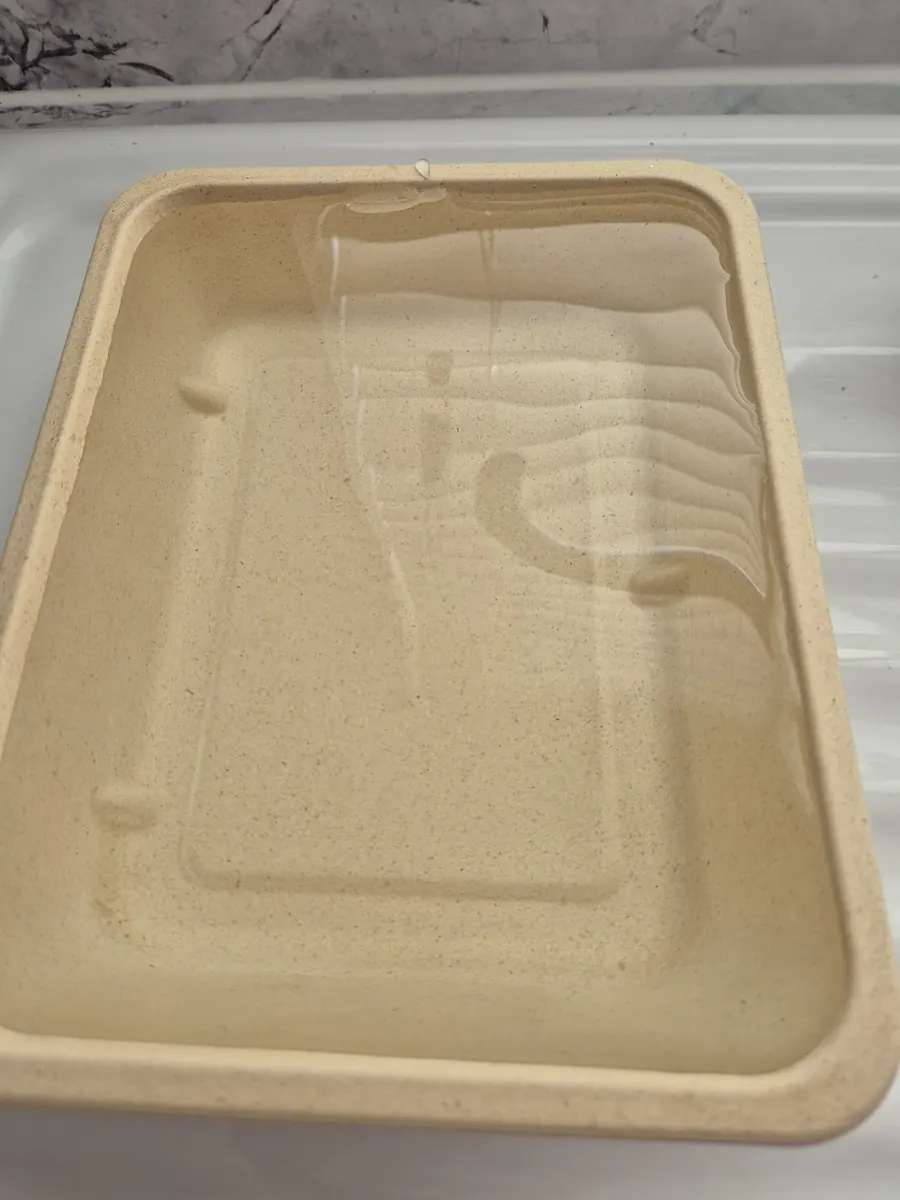
For more on the product questions behind a fibre tray, see our natural-fibre packaging article. Our AKOS development overview sets out how commercial, technical and impact evidence are intended to develop together.
Primary sources and interpretation
The funding figures and AgRI 2040 description above come from the linked primary sources, checked on 28 September 2026. The questions about customers, pilots, product performance, public funds and AKOS are AgriKinetics commentary. The supplied prototype images are illustrations, not verified test results.
- Circular Bio-based Europe Joint Undertaking, 23 September 2026. “2026 CBE JU call attracts 272 project proposals,” with full call and topic figures. Read the CBE JU announcement.
- European Commission, 24–25 September 2026. EU AgRI 2040 Conference and programme. Read the conference page.
- European Commission, 8 September 2026. AgRI 2040 strategic approach to agriculture and rural research and innovation. Read the strategic approach.