
The biggest advantage of growing Miscanthus giganteus and its various industrial applications, is that it lends itself to small-scale, decentralised production units, particularly suited for the rural area.
The Rural – Urban Divide
56% of Europeans live in rural areas. They occupy over 90% of Europe's territory and contribute 43% of Europe's gross value. Rural enterprises currently account for 55% of employment.
One of the main concerns that has been neglected so far are their energy needs. Rural individuals have a larger carbon footprint than urbanites and need greater access to cleaner energy choices.
Combined Heat and Power (CHP)
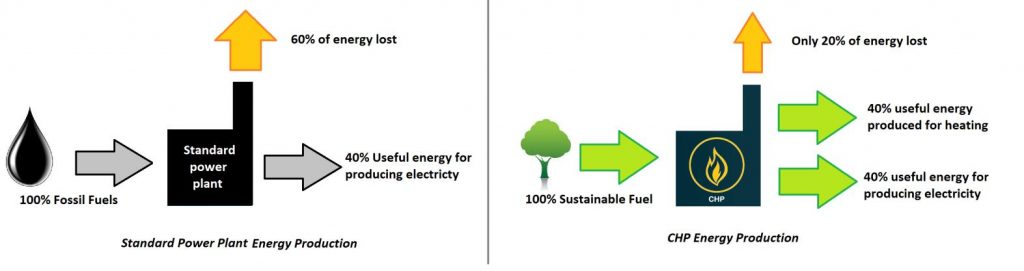
The combined heat and power system (CHP), uses wasted heat from power generation, greatly increasing the efficiency of the fuel used. Using CHP, 70-80% of the fuel is converted to heat and electricity. Some CHP have a reported efficiency of even 90%.
Decentralised and Local
An essential feature of CHP is that it can be decentralised and local. Consumers can produce their own power and meet their heating needs simultaneously with CHPs. This has the additional benefit of saving the 7% energy that is lost during traditional transmission of electricity over long distances.
Advantages of Using Miscanthus in CHP
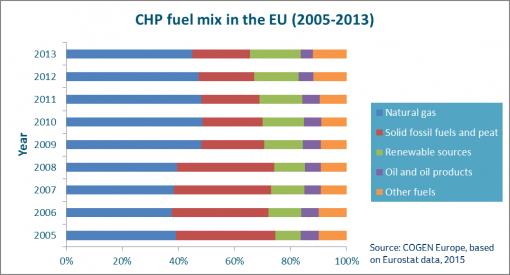
Every CHP system reduces carbon emissions, even those that use fossil fuel. With the emphasis on climate protection increasing, so is use of renewables as carbon neutral fuel.
The use of renewables in the EU has grown significantly, reaching 25.2% of gross final energy consumption in 2024. Biomass (including biofuels and biogas) remains the largest renewable source, accounting for 46% of all renewable energy. Among bioenergy crops, Miscanthus continues to achieve the best greenhouse gas reductions, making it a preferred choice for sustainable energy production.
Miscanthus in a Bio-Based Economy
Though Miscanthus giganteus is most popular as a bioenergy crop, it has many other uses including:
- Biocomposites: Medium density fibreboards, light natural sandwich materials, bio-concrete
- Bioplastics: Biodegradable packaging products
- Paper and cardboard: Non-wood pulp for paper production
- Farming substrate: Mushroom growing, animal bedding
- Geotextiles: Reinforcement, filtration, drainage
Conclusion
National governments and EU need to urgently formulate policies and schemes that can provide the necessary incentive to revive rural areas by promoting bio-based rural industries. AgriKinetics believes a bio-based economy with proper environmental checks can be a win-win situation for all.