
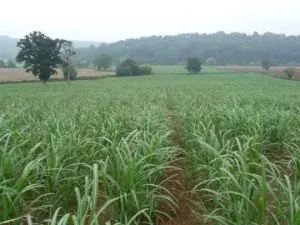
Miscanthus × giganteus is a sterile hybrid of Miscanthus sacchariflorus and Miscanthus sinensis. Once established, this perennial grass can produce an annual harvest over many years. Its yield, energy balance and environmental performance depend on site conditions, establishment, management, processing and end use.
The crop requires all the CO2 produced when burning as a fuel for re-growth the following year, whilst providing annual Carbon sequestration back into the soil. Carbon sequestration is the process involved in carbon capture and the long-term storage of atmospheric carbon dioxide (CO₂).
Uses for Miscanthus
Energy
Heat is considered to be responsible for 47% of all carbon emissions in the UK and the average UK household emits circa 8t carbon per annum. By reducing our reliance on fossil fuels and turning to renewable alternatives to heat our homes, places of work, leisure and other buildings is the sustainable way forward.
For example: each 100kW (5 x 3 bedroom houses) of boiler output requires 35t of Miscanthus chips/pellets per annum which can be produced from 3 hectares (7.5 acres) annually. 1Kg of Miscanthus chip or pellets are circa 4 kWh of heat and are ideal for all sizes of sustainable local heat projects, especially when grown within 5 miles of a boiler.
Miscanthus has the following levels of carbon intensity:
- Miscanthus Chip: Grown within 2km of the boiler c. <3g of CO2 per Mega Joule
- Miscanthus Bales: Grown within 20km of the boiler c. <4.5g of CO2 per Mega Joule
- Miscanthus Pellets: Grown within 160km of the boiler c. <7g of CO2 per Mega Joule
Animal Bedding
Miscanthus bedding is available for a variety of animals, including cattle, horses, poultry and small pets. The bedding is organic material grown without the use of Chemical or Chemical fertiliser. Once used, ideally as deep litter bedding, Miscanthus breaks down very quickly into a peat type material ready for the garden.
Composites
Miscanthus offers excellent opportunities for the production of fibre alternatives, both for Biodegradable packaging products, and innovative materials made from Nano cellulose. This will open up markets for green building materials, homeware, car manufacturing, furnishing and many other uses.
Phytoremediation
Using Miscanthus for clean-up of contaminated land, especially where the soil contains metals, enables a crop to be grown on otherwise useless ground. The big advantages are that the crop can then be sold for other uses (depending on level of metals contained in the cane).
Game Cover
Miscanthus offers excellent cover for small and large mammals making it the ideal Game Cover crop providing long-term winter cover. The crop is benign and offers no feed value to its inhabitants.
Biodiversity
Due to the mature plant having a 48% carbon content, this is a NON FOOD crop and is excellent for Biodiversity. Studies have shown an increase in small & large mammals and birds, by providing good winter cover.
Summary
Renewable Energy is essential to replace and displace High Carbon fossil fuels worldwide. The UK currently grows circa 10,000 hectares of Miscanthus. The UK Biomass Strategy suggests that up to 350,000 ha could be grown in the UK, having no negative effect on food production. This amount of Miscanthus could reduce our current timber usage by circa 40%.
Miscanthus provides actual carbon savings and is therefore an important component in reducing the effects of Climate change.