
Initial Ground Assessment
Miscanthus x giganteus is a hardy perennial that can be harvested yearly, once the crop is established, for a number of saleable uses. Assessing the suitability of land for planting miscanthus is essential in ensuring that the crop will grow and thrive as a long term source of sustainable income.
The location of the land, the soil constitution, the climate throughout the year and the amount of available water will all assist in the decision making process. Optimisation of conditions for good growth will be achieved in soil with a pH balance of between 5.5 and 7. Water is vital but overly wet conditions are not ideal.
UK Conditions
For planting miscanthus, most agricultural land conditions within the UK will be good enough to grow the crop. Fields prone to regular flooding are not suitable. The climatic conditions in the more northerly parts of England and Scotland may be relatively limiting due to cooler average temperatures but the crop should still grow to a harvestable size.
How to Plant Miscanthus Giganteus
Once the land has been selected it should be sprayed with a suitable herbicide in the late autumn. This will prepare the land for the necessary rotovating which is ideally done as soon as the soil starts to warm after the winter frosts, usually late February or early March.
The best time to plant Miscanthus is late March/early April once the ground has recovered from the winter frosts and has been properly prepared.
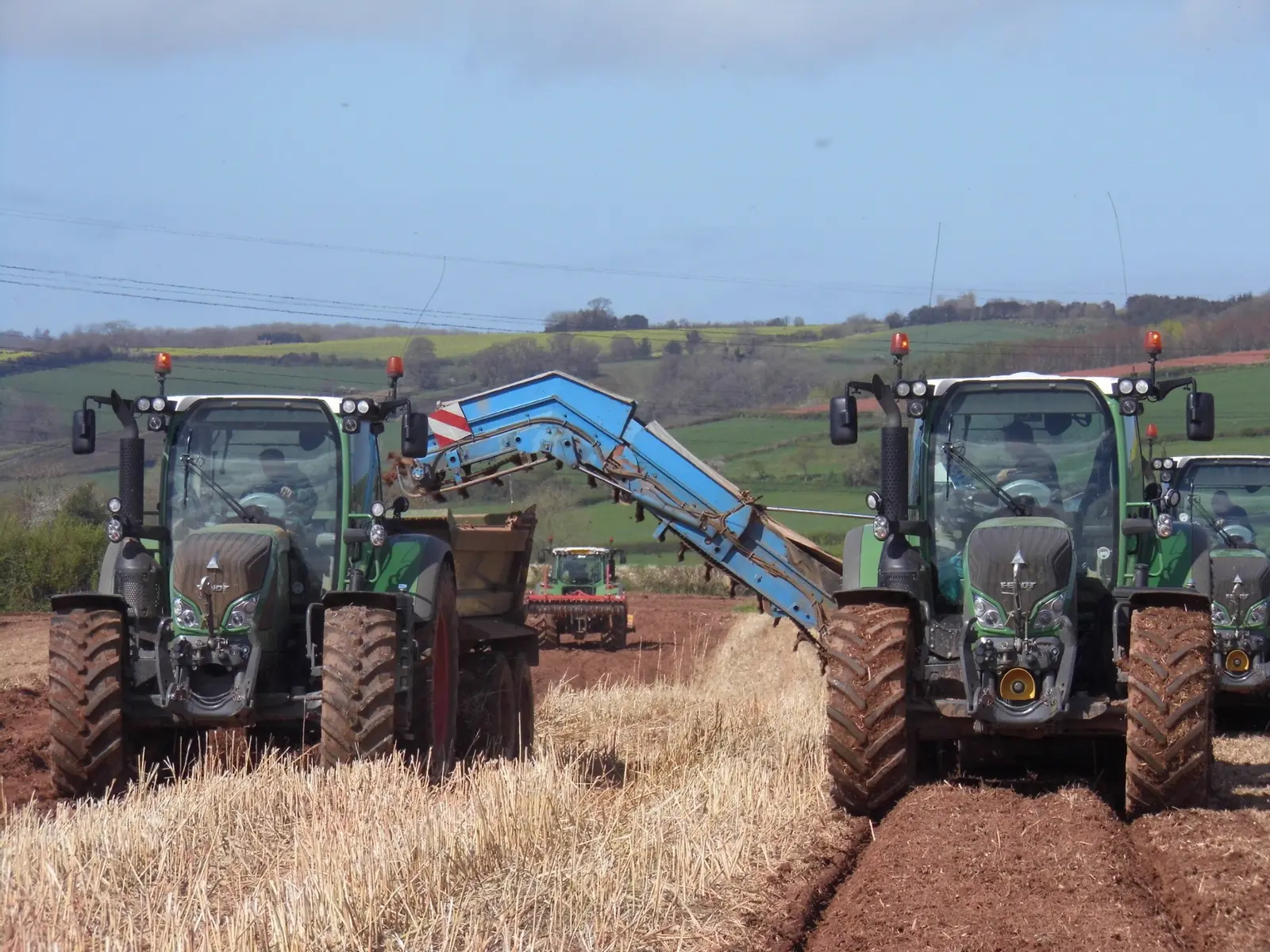
Planting miscanthus will take the form of placing the rhizomes in the ground at a density of about 15,000 per hectare. Rhizomes should be well budded and spaced about 80cm apart from each other.

Miscanthus Rhizomes
Selecting fresh rhizomes with at least 2 or 3 buds and using standard potato planting equipment has historically resulted in at least a 90% success rate. The rhizomes will produce enough plant stems for a healthy harvest for many years to come. Once planted the soil should be compacted with a heavy roller.
When the miscanthus planting takes place at around the end of March, it is at a depth of between 5cm and 10cm. This will allow the rhizomes to produce a few shoots each that will start to grow through the end of spring and the beginning of summer.
Rate of Growth
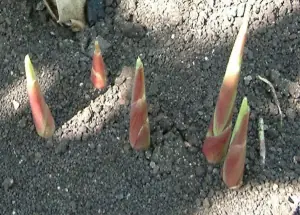
How fast the miscanthus grows in the first summer is relatively not as quick as when the crop is mature. It will not reach harvestable heights at this early stage but will grow to between one to two metres in the first summer and will establish its presence in the ground as the dominant plant.
The subsequent leaf litter that falls during late summer and autumn will form a protective layer of mulch which provides a natural prevention for the growth of future weeds. There is now no need for further herbicide spraying or any other chemical treatment.