
Harvesting of Miscanthus x Giganteus grass crop in the UK will usually take place during late winter and early spring following senescence, a time when other fields do not need much attention. The process of senescence is the drawing of the nutrients back into the ground for storage within the rhizomes; it causes the stem of the plants to lose moisture content and so they become ripe for harvesting.
When to Harvest Miscanthus
Giant Miscanthus will initially be harvestable after two years of growth from the time of planting. The first summer will produce stem heights of between one and two metres. Once the plants have two years of growth and more plant maturity, miscanthus harvest can expect to take in stems of at least three metres in length.
Fully grown fields of Miscanthus grass can be harvested in the UK between January and March using harvesting equipment that is readily available in the Agricultural industry. Harvesting takes place following complete die back of leaves and when ground conditions allow travel.
How to Harvest Miscanthus
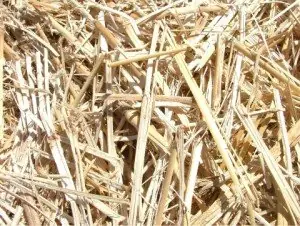
The method of harvesting Miscanthus for baling is to swath it, using an adapted maize/grass self-propelled forage harvester adapted to produce 30 to 45 cm length rods, without breaking up the cane thus maintaining its waterproof qualities whilst drying.
The crop will naturally dry in the swath and will be ready to harvest once the rods have reached a moisture content of less than 16%.
If harvesting the Miscanthus for 'Chip' use, then the Forage harvester does NOT require adaption and the chip cut direct in the field when dry, but before new shoots start to appear.
Baling Miscanthus
The moisture content at baling should be below 16%. If the crop is damp underneath, then turning the crop over in the swath just prior to baling should be considered to ensure all the crop is under 16% when baled. The bales should have 6 tie string and packed tightly to ensure maximum weight in each bale.
Storage of Miscanthus
Once the crops are cut and baled they must be stored properly in a dry, safe area. This should take place indoors and precautions should be taken to prevent minimal in store damage. Bales will normally be grown and purchased for and on contract, therefore it is essential to keep your bales in good condition prior to their collection.
End Uses of Miscanthus
The continuing rising demand in the Energy sector means that good agronomy and process management should guarantee miscanthus growers healthy margins for the long term. Other markets purchasing the end product include bedding processors and fibre processors. With the need for a global reduction in carbon emissions, there is a very bright future for biofuels like giant miscanthus.