
In order to establish a strong and high-yielding crop, miscanthus care is generally important in the early stages of establishment. Once the crop is fully established and has gained some protection from weeds and weather, the amount of care required reduces considerably.
Miscanthus Growth Cycle
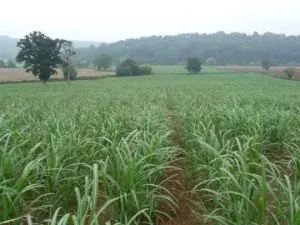
Giant Miscanthus (miscanthus x giganteus) is a biomass crop that has a very regular annual cycle and demands little maintenance once the crop is mature. Establishing the crop as mature will take 2 to 3 years at which time the crop can be harvested in the very early spring allowing it to grow again and be re-harvested at a similar stem length the following year.
The crop will start growing in spring and continue throughout the summer. Once growth slows and ceases in the autumn, surplus nutrients held in the stems start to move back down towards the rhizome in the ground for winter storage. This assists in the reduction in moisture of the harvested crop allowing it to be baled soon after cutting.
Division and Propagation
Giant miscanthus is a hybrid sterile crop and does not reproduce through pollination. In order to create new fields of freshly grown plants, rhizomes must be propagated through division and then replanted.
Agricultural best practice for miscanthus is for the rhizome dividing to be done with mature actively growing crops whilst in the field. The most effective reproduction results have been achieved with crops that are 2/4 years into the long term growing cycle of growth and harvest. Rhizomes of four to five years old can have as high as an 88% success rate.
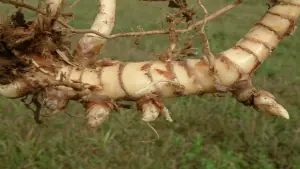
How to Divide the Miscanthus Rhizome
Rhizome division takes place early in the year, ideally after the last frost of the winter and when suitable soil conditions allow. In the UK it will usually be before the rhizomes have started to produce buds.
For successful miscanthus propagation, a blade is first used to cut the rhizomes, growing just under the surface soil, from the deeper more established roots. This process is known as "undercutting". Once complete the rotivator can be brought in to break up the rhizomes into smaller pieces.
Miscanthus Grass Care
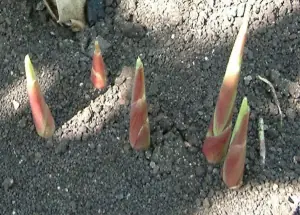
The time of most vulnerability in farming giant miscanthus plants is in the early stages of development. The initial care and attention in preparing the ground properly for first year planting is essential in minimising the risks at this time.
Miscanthus develops natural defences throughout this time. The layer of mulch produced from the leaves discarded by the plants during the autumn reduces weed plant growth. The height of the plants themselves minimise the levels of sunlight that reach the soil surface, again discouraging any invasion from unwanted plant growth.